
Scale gap↗
~2/3Of organizations have not yet begun scaling AI across the enterprise.
McKinsey, State of AI 2025 ↗Service · AI
AI for organizations where the hard part isn't the model — it's the legacy systems, the governance, and the teams that have to adopt it.
The real problem
A demo on clean sample data clears every review; the same system fails once it has to read a thirty-year-old database, pass a security audit, and be run by teams who weren't in the room.
The blocker is rarely the algorithm — it's integration, governance built in too late, and a change-management gap nobody owned. Enterprise AI development closes exactly those three gaps.
Of organizations have not yet begun scaling AI across the enterprise.
McKinsey, State of AI 2025 ↗Qualify as high performers, with more than 5% of EBIT attributable to AI.
McKinsey, State of AI 2025 ↗Where it lands
At enterprise scale, AI earns its keep inside specific, high-volume functions.
Automates high-volume back-office work — claims, order processing, document review, reconciliation — by reading your existing systems and acting through them under permissioned controls.
Lower cost-per-transaction and shorter cycle time, without ripping out the systems of record.Scores transactions, flags anomalies, and surfaces compliance exceptions in real time, with every decision logged and explainable for an auditor.
Faster, more consistent decisions with a defensible record.Lets employees across departments query policies, contracts, manuals, and internal data in plain language, grounded in the documents you actually hold.
Faster, more consistent decisions and fewer escalations, enterprise-wide.Resolves high-volume service requests across channels, wired to your CRM and order systems, escalating to a person when confidence drops.
Lower contact cost and faster resolution, with consistent answers across a large customer base.Applies AI to the software estate itself — code understanding, migration, test coverage, and maintenance on the legacy systems AI initiatives keep tripping over.
The integration backlog shrinks and modernization moves faster.Improves demand, inventory, capacity, and workforce forecasts by learning from your operational history.
Less waste and fewer stockouts or shortfalls from sharper forecasts.60% will miss expected AI value by 2027 on incohesive governance. At enterprise scale, governance isn't the add-on — it's what lets the system clear audit, integrate with the real stack, and earn the trust to roll out. We design it in from week one.
As of June 2026 · revisit quarterly
Independent industry findings — not Silicon Prime's own client results.
AI high performers. With 5%+ EBIT impact, while nearly two-thirds haven't begun scaling AI enterprise-wide.
McKinsey, 2025 ↗Miss expected value by 2027. Because their AI governance is incohesive.
Gartner ↗Of agentic projects canceled. By the end of 2027.
Gartner, June 2025 ↗More likely to hit delays. For orgs with fragmented or legacy systems — while up to 80% of IT budgets go to maintaining outdated systems.
IDC, 2025 ↗What's included
The scope that separates a system the enterprise adopts from a pilot that never leaves one team — deliberately broader than general AI development.

We rank use cases by value and feasibility and judge whether your data, systems, and teams are ready — including the honest "not yet" call.
We wire AI into your real systems of record — ERPs, CRMs, data warehouses, legacy databases — through governed interfaces, so it acts on production data, not a demo extract. The work most pilots skip.

Governance built in, not on: policy on what the system may do, decision logging and explainability for auditors, model and data lineage, and human-in-the-loop gates where stakes are high — fitted to your existing risk functions.

Runs in your own cloud tenant under your access controls, with scoped, permissioned integrations and documented data paths — shaped to your regimes (HIPAA, SOC 2, financial-services controls).
Before it reaches users, it's measured against an evaluation suite built from your real cases — accuracy, failure modes that must never ship, go/no-go thresholds — then monitored in production for drift and cost.

We ship in stages — pilot, then expansion — instrument it centrally, and train each team to run the system and maintain its evals. Adoption is engineered, not assumed.
What you get when you hire us — all assigned to you
How it runs
The same delivery model behind all our AI development work, tuned for enterprise scale.
Rank use cases, map the systems and data the AI must integrate with, and agree the success metrics and governance requirements.
Output: a prioritized plan & a readiness verdictBuild the evaluation suite from your real cases, design the integration and access-control architecture, and define the governance model — logging, escalation, lineage.
Output: an architecture & a golden test setDevelop in your own cloud tenant, wired to your systems of record through governed interfaces, with guardrails, audit trails, and human-in-the-loop gates in place.
Output: a working system past the integration that kills most pilotsPilot with one team, measure against the kickoff metrics, then expand team by team on a shared monitoring spine, training each team to operate it.
Output: a system adopted across teams & the people who own itTrack record
An enterprise AI system is only as trustworthy as the engineering discipline underneath it — evals before launch, staged rollout, monitoring after, governance built in.
A Stanford-rooted Responsible AI lab, founded 2011, run by founder Kelvin Tran — 20+ years of production engineering. Where the honest answer is "your enterprise isn't ready for this use case yet," we say so.
 200+ locations
Governance & quality gates · 200+ locations · 4 yrs
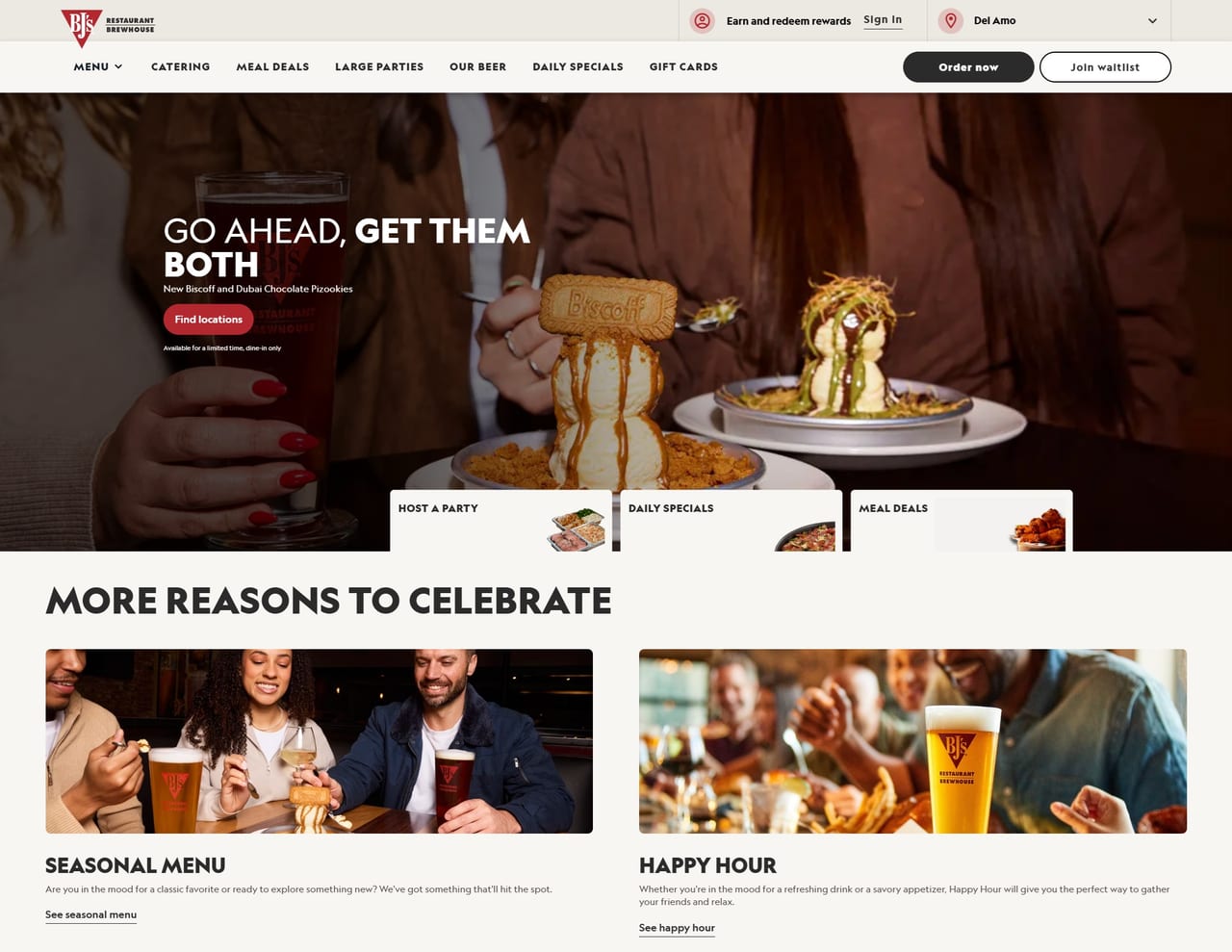
For four years we've held BJ's Restaurants, a 200+ location enterprise with software-critical operations, at a release cadence that moved from every two weeks to twice a week while sustaining zero critical defects — without replacing their team or stack. Moving a large organization's software through governance and quality gates, integrating with what exists, and earning the trust to ship faster because the controls are tighter — the enterprise-scale problem in microcosm.
At enterprise scale, governance — what the system may do, when it must escalate, how it's audited — is the product, designed in from week one.
✓Connecting to thirty-year-old systems of record is where most pilots die — so it's where our engagement starts, not where it stalls.
✓A staged, multi-team rollout with change management on a shared monitoring spine — the gap that leaves most enterprise AI stuck in one department.
✓One accountable lead from scope to handover; models, evals, integrations, governance artifacts, and code assigned to you, your teams trained to run it.
✓Where it lands first
Risk, fraud, and compliance decisioning where every output is logged and explainable, and integration runs through governed interfaces to core systems.
Banking software →02Clinical and operational AI inside HIPAA-compliant architectures, with human-in-the-loop gates and a complete audit trail on every decision.
Healthcare software →03Process automation and forecasting across a distributed operation — the setting where we sustained zero critical defects for four years.
Enterprise apps →FAQ
Scale changes the work. General AI development covers the build itself; enterprise AI development adds what scale demands — integration with legacy systems of record, governance and audit built for compliance review, security engineering inside your own tenant, and a staged multi-team rollout with change management. The model is often the smallest part. McKinsey's State of AI (2025) found nearly two-thirds of organizations have not yet begun scaling AI enterprise-wide — and it's integration, governance, and adoption, not the algorithm, that stalls them.
Through permissioned, governed interfaces to your actual systems of record — ERPs, CRMs, data warehouses, older databases — so the system reads and acts on production data, not a sample extract. Legacy integration is where most enterprise AI stalls: a 2026 Thoughtworks/IDC study found only 12% of organizations have reached true AI-driven operations, with the rest stuck in reactive modernization cycles. We treat that integration as the core of the engagement and bring our application-modernization discipline where the estate itself is the blocker.
We build governance in from the first week: policy on what the system may and may not do, decision logging and explainability for auditors, model and data lineage, and human-in-the-loop gates where the stakes are high — all designed around your existing risk and compliance functions. Gartner (2023) projects that organizations which operationalize AI trust, risk, and security management see a 50% improvement in AI adoption and business outcomes, so designing governance in early is what lets a system pass audit instead of being switched off after an incident.
The system runs in your own cloud tenant under your access controls; integrations use scoped, least-privilege calls; and every engagement starts with an NDA and a security review. We align to your existing SOC 2, HIPAA, or PCI controls rather than asking you to adopt ours. Business API traffic to the major model providers isn't used to train their models by default, and we document every data path so your security team verifies rather than trusts.
A staged rollout, not a big bang. We pilot with one team, measure against the metrics set at kickoff, then expand team by team on a shared monitoring spine, training each team to operate the system and maintain its evals. Gartner (2024) predicted at least 30% of generative AI projects would be abandoned after proof of concept — and the cause is rarely the model, it's data quality, unclear business value, and change management. Adoption is engineered here, not assumed.
Judge partners on production-grade delivery at enterprise scale, not demos: ask for systems already live in production, how they integrate with your estate, how governance and security are handled, who stays accountable, and what IP and data terms you get in writing. A vendor delivers what you ask for; a partner challenges whether you're asking the right thing. We run each engagement with one accountable lead and no handoffs — for example, our patent-pending Aegis AI process runs BJ's Restaurants' platform across 200+ locations, moving releases to twice a week with zero critical defects over a 12-month window — and every build starts with an NDA, a security review, and least-privilege access inside your own cloud tenant.
IP ownership is defined in each engagement's contract and scoped explicitly at kickoff — models, prompts, evaluation suites, integrations, governance artifacts, and code — so there's no ambiguity about what transfers to you. In practice the engagement is built around handover: your teams are trained to operate and extend the system, and you can keep us on a reduced retainer for support or take the keys entirely.
Most enterprise AI engagements reach steady state in 4–8 weeks under a fixed-scope model with one accountable lead and payment structured around agreed ROI rather than hours. Build cost depends on scope and integration complexity — our AI development cost guide gives real ranges — and the run cost (model usage plus infrastructure) is modeled before we build, so the first invoice is a forecast you've already seen.
Thirty minutes · no pitch deck
Bring the use case and the systems it has to live inside — we'll tell you honestly whether you're ready, where the integration risk sits, and what it takes to roll out across teams.

