

Enterprise impact↗
6%Reach enterprise-scale EBIT impact — though 88% now use AI in at least one function.
McKinsey, State of AI, Nov 2025 ↗Service · AI
We tell you where AI pays, what to build versus buy, and in what order — then hand you a costed roadmap you own. Advice from a team that ships production AI, free of any bias toward who implements it.
The real problem
Most organizations buy AI before they have a strategy for it. Tools get adopted, pilots multiply, the budget grows — but nothing reaches the bottom line. The differentiator isn't the model, it's redesigning the work around it.
A good AI strategy is the cheapest insurance against ending up in the stalled majority: it decides what's worth building, with evidence, before the budget is committed.
Reach enterprise-scale EBIT impact — though 88% now use AI in at least one function.
McKinsey, State of AI, Nov 2025 ↗Of generative-AI projects will be abandoned after proof of concept by the end of 2025.
Gartner, July 2024 ↗What it decides
Not a slide deck — a set of specific, fundable decisions, each one removing a way an initiative typically fails.
Ranks candidate use cases on impact versus feasibility. Capital goes to the work that pays, not the work that demos well.
Scores in-house build against off-the-shelf tools on cost, control, switching risk, and time-to-value — free of bias toward us building it. You avoid both rebuilding what you could buy and locking into a vendor that can't do the job.
Turns the prioritized use cases into a phased plan tied to business outcomes. A fundable plan with a defensible sequence, not a scatter of disconnected pilots.
Costs each initiative — build, run, infrastructure — against projected value, so the case survives a CFO's scrutiny. Leadership funds AI on numbers, not enthusiasm.
Defines oversight, accountability, model-risk controls, and audit trails before the first model ships. Initiatives that clear legal and risk on the first pass.
Every decision rests on whether your data and systems can support the plan — the diagnostic we run as a dedicated readiness assessment. A strategy grounded in what you can support, not what a deck assumes.
88% use AI. Only ~6% reach enterprise EBIT impact. A funded strategy decides what's worth building, with evidence, before the budget is committed — workflow redesign, not model choice, separates the high performers.
As of June 2026 · revisit quarterly
Independent industry findings — cited as third-party evidence, not Silicon Prime's own client results.
Moved past the pilot. Of companies have gone beyond proof of concept to generate tangible value — the rest stall short of return.
BCG, Oct 2024 ↗Reach enterprise EBIT. 88% use AI, but only ~6% achieve enterprise-scale EBIT impact — workflow redesign, not model choice, separates the high performers.
McKinsey, Nov 2025 ↗Of agentic projects canceled. By end of 2027, on escalating cost, unclear value, and inadequate risk controls.
Gartner, June 2025 ↗What's included
Advisory: the deliverable is a set of decisions and a plan you own — distinct from any build work that follows.

Turning where you want AI to take the business into objectives with a number on them — not just "use more AI."
Ranking candidate use cases on impact and feasibility, so the first project is the likeliest to return.

Scoring in-house build against off-the-shelf tools on cost, control, and switching risk — free of bias toward who builds it.

A phased, costed roadmap with build and run economics modeled, so leadership funds it on numbers, not enthusiasm.

Oversight, model-risk controls, accountability, and audit trails defined up front — governance as part of the strategy, not a later scramble.

Execute the roadmap with any partner, or have the same team carry it into the build via our AI development services.
What you get — all documented and owned by you
How it runs
The same discipline behind our AI development work — one accountable lead, fixed scope, no handoffs.
We evaluate readiness across data, systems, skills, and governance, and pin down what the business is trying to achieve.
Output: a grounded picture of what AI you can supportWe surface and rank use cases on impact and feasibility, and run the build-or-buy call on each.
Output: a ranked portfolio & a build-or-buy call eachWe sequence the priorities into a phased, costed plan with governance and an ROI model.
Output: a fundable roadmap you ownTake the roadmap to any partner, or have the same lead carry it into the build under full work-for-hire IP assignment.
Output: implementation, owned by your team or oursTrack record
Because we advise and ship, we find out whether a roadmap is sound years after the consultant has gone.
A Stanford-rooted Responsible AI lab, founded in 2011, run by founder Kelvin Tran — 20+ years of production engineering, personally accountable for every engagement. We'll tell you when not to build something, which a firm paid only to implement won't.
 Since 2012
A roadmap that held · since 2012
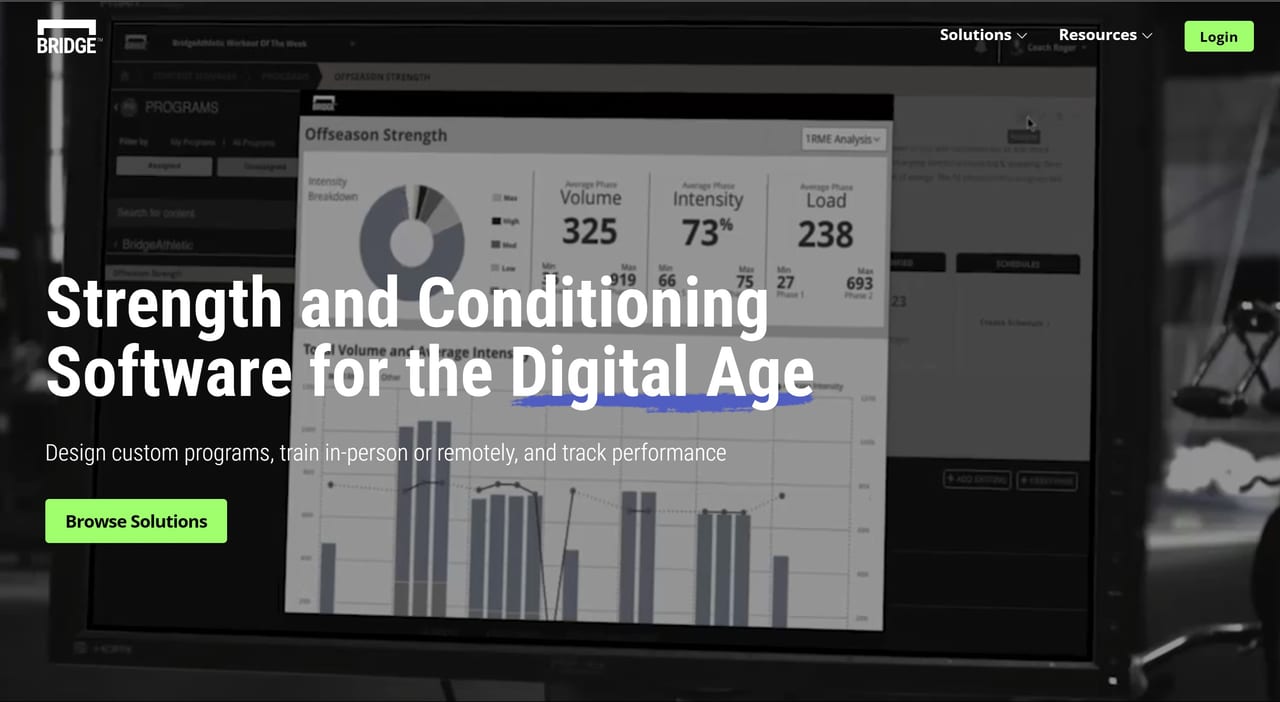
Bridge Athletic — a product partnership since 2012. The architecture and roadmap we set early carried through more than a decade of growth and re-platforming and is still live 12+ years on, now used by USC, the LA Rams, and MLB and MLS teams — the durability that advice from people who also build is supposed to buy you.
Roadmaps come from a team that ships production AI, so the build-or-buy call is honest — we'd be the ones building it.
✓Governance and model risk are designed into the strategy from day one, not retrofitted to pass an audit later.
✓The roadmap, decisions, and ROI model are yours — take them to any partner.
✓No account managers, no handoff — the person who writes the roadmap answers for it.
✓Where it pays off first
Most where regulation and risk make sequence and governance decisive.
Prioritizing AI that clears HIPAA and clinical-risk review on the first pass, with governance sequenced in from the start.
Healthcare software →02Build-or-buy and roadmap work for fraud detection and real-time decisioning, where model-risk controls and explainability are part of the plan.
Fintech software →03Sequencing recommendation, dynamic-pricing, and post-purchase use cases by ROI, so the highest-return work ships first.
Ecommerce software →FAQ
A prioritized portfolio of use cases, a build-or-buy decision on each, a sequenced enterprise roadmap tied to business outcomes, an ROI model, and a Responsible-AI governance framework — all documented and owned by you. Our AI consulting services cover strategy through roadmap; building what the roadmap calls for is a separate, optional step you can give to any partner.
Most pilots stall not on the model but on unclear ownership, weak ROI, and no path past the demo — Gartner projected in 2024 that at least 30% of generative AI projects would be abandoned after proof of concept by the end of 2025. We plan for production from day one: every initiative on the roadmap gets a named owner, a measurable business metric, an integration path into your existing systems, and a governance checkpoint before build — so what you fund is what can actually ship, not just what demos well.
Both — your call. The roadmap is yours to execute with any partner, with no lock-in. If you'd rather not re-scope with a new vendor, the same accountable lead carries it into delivery through our AI development services, with IP ownership defined in each engagement's contract. The advice doesn't depend on you hiring us to build.
We score each initiative on cost, control, switching risk, and time-to-value against both off-the-shelf options and a custom build — and because the recommendation isn't tied to who implements it, "buy" and "don't build this yet" are real outcomes we reach often. The aim is to stop you over-building what you could configure, and under-building what's genuinely differentiating.
No — getting the data ready is part of the work. We assess your data and systems as the first step and surface the use cases for you; if the data foundation isn't ready, sequencing that fix is the first item on the roadmap. Starting before you have it all figured out is normal and expected.
It's part of the strategy from day one, not a compliance afterthought. We define oversight, model-risk controls, accountability, and audit trails as the roadmap is built — drawn from our Responsible AI practice — so initiatives clear legal and risk review on the first pass instead of stalling in it. This matters most in regulated sectors like healthcare and fintech.
Speed and honesty. An internal team is close to the politics and rarely free to say "don't build the executive's pet project." An outside lab that also ships brings pattern recognition from real deployments and the independence to rank initiatives on ROI, not who asked: consulting that challenges the plan rather than rubber-stamps it.
The advisory engagement is fixed-scope and scoped with you up front; timeline scales with the complexity of your use cases and data, and you'll know it before any work starts. Build engagements that follow typically reach steady state in 4–8 weeks. For build economics, our AI development cost guide gives real ranges.
Thirty minutes · no pitch deck
Tell us where you want AI to take the business — we'll assess readiness, name the trade-offs, and hand you a prioritized, ROI-backed roadmap you can take to your board or any partner.

