Industry · Banking

Digital banking, fraud, and reporting — auditable by design.

We build the software banks run on top of their core — digital-banking experiences, fraud and risk models, regulatory-reporting pipelines, and servicing systems — grounded in your data and wired to the core and ledger you already run. The application and intelligence layer, not a chartered core sold as a regulated product.

Fixed scope One accountable lead Production in 4–8 weeks

On top of your core, not replacing it

DIGITAL FRAUD REPORTING
API · INTEGRATION LAYER
YOUR CORE & LEDGER
UNDER YOUR CONTROLS
SCOPED ACCESS AUDIT LOG HUMAN GATE

The real problem

Why banking software is so hard to ship without breaking something.

Because in banking the software is the regulated product, and a wrong answer is a fraud loss, a compliance breach, or money in the wrong place. A bank's stack is rarely short of data; it's short of safe ways to move.

Decades-old cores sit behind brittle integrations, data is fragmented, fraud rules bury the real signal, and every feature must clear security, audit, and a regulator. Change is slow because change is dangerous — and the gap is the engineering that lets a regulated institution ship without risking money, data, or its license.

11–15.5%

Of payroll spent on compliance at the smallest banks — versus 6–10% at the largest. Fixed overhead that won't scale down.

CSBS via ABA Banking Journal, Nov 2025 ↗

~50%

Of U.S. banked households use mobile banking as their primary access — so the digital experience is the bank.

FDIC 2023 National Survey ↗

Where it earns its keep

Where banking software earns its keep — and what each delivers.

Not one product — high-leverage applications on top of your core and ledger. Illustrations show how the technology helps, not Silicon Prime client results.

01

Digital banking & account experiences

Web and mobile experiences customers actually use — onboarding, servicing, transfers, statements, alerts — wired to the core so balances are real-time. Fewer drop-offs, lower branch load, a channel that retains.

A customer opens and funds an account from their phone in one sitting, instead of abandoning a multi-day paper process.

02

Fraud detection & risk decisioning

Learns an account's normal pattern and scores transactions for fraud in real time — flagging the genuine anomaly, letting legitimate activity through. More fraud caught earlier, fewer false declines.

A card-not-present charge that breaks the pattern is held for step-up verification in milliseconds, while the normal grocery run clears.

03

Regulatory reporting & compliance automation

Assembles the data behind AML/KYC, transaction monitoring, and filings into auditable, repeatable pipelines — replacing manual spreadsheet assembly. Lower cost, faster filings, an audit trail examiners can follow.

A suspicious-activity review that took hours across five systems is pre-assembled into one reviewable case with its evidence.

04

Customer servicing & support automation

Answers balance, transaction, and account questions across chat and voice from your systems of record — routing anything sensitive to a banker. Faster resolution, reclaimed agent capacity, 24/7 servicing.

A customer disputing a charge at midnight gets the details and the dispute started immediately, with the case handed to a specialist by morning.

05

Lending & credit-decisioning support

Builds the data and decisioning layer behind origination and underwriting — pulling signals, applying policy, surfacing the explanation — a human owning every adverse decision. Faster, consistent decisions with fair-lending documentation.

A denied applicant gets a defensible explanation and the lender keeps an examinable record, instead of reconstructing the rationale later.

06

Core-system modernization & integration

Wraps, exposes, and incrementally modernizes the legacy core through APIs and a stable integration layer — so new products ship against modern interfaces without a rip-and-replace. Modern features at a safe pace, far less risk.

A new digital product launches against an API layer in front of the core in weeks, instead of waiting on a multi-year migration.

Every change Auditable

In banking, the software is the regulated product. A wrong answer is a fraud loss, a compliance breach, or money in the wrong place. We build inside your access controls and audit logging, with a human gate on every consequential decision.

Third-party evidence · each figure dated & sourced

What this software does to banking operations — the measured impact.

Independent, named-source findings — cited as industry evidence, not Silicon Prime's own client results.

$200–340B

In annual value generative AI alone could add to banking — equal to 2.8–4.7% of industry revenues, if its use cases were fully implemented.

McKinsey, June 2023 ↗

2× / +300%

Card-fraud detection. Mastercard reports its gen-AI tech doubled detection of compromised cards and sped at-risk-merchant identification 300% — a vendor-reported result, cited as evidence of what fraud models can do.

Mastercard newsroom, May 2024 ↗

~50%

Use mobile banking as their primary access. Of U.S. banked households — confirming the digital experience is, for most customers, the bank.

FDIC 2023 National Survey ↗

We set the baseline each system targets — fraud caught, false-decline rate, filing time, digital conversion — at kickoff and report against it, so the value is measured, not assumed.

What's included

What banking software development covers.

The application and intelligence layer on top of your core — we build software for banks; we don't sell a chartered core, and we integrate with yours rather than replacing it.

01

Digital banking & customer-facing apps

Web and mobile experiences — onboarding, servicing, transfers, statements, notifications — built against your core through a stable integration layer so customer-facing data is real-time and consistent.

02

Fraud, risk & decisioning models

Machine-learning models that score transactions and behavior for fraud and risk, validated against your historical data so alerts are trustworthy — with human-in-the-loop review on the decisions that matter.

03

Regulatory reporting & compliance pipelines

Auditable, repeatable data pipelines behind AML/KYC, transaction monitoring, and filings — built on trusted data so the numbers reconcile and the audit trail holds up to examination.

04

Customer-servicing & support systems

Chat and voice servicing wired to your systems of record, answering account questions and starting routine workflows, with sensitive or low-confidence interactions routed to a banker rather than guessed at.

05

Security, access & DevSecOps

Banking software lives or dies on security. We build under the access controls and review gates your institution already runs — scoped permissions, encryption, audit logging — folding in DevSecOps rather than bolting it on at the end.

06

Core-system modernization & API layers

We expose and incrementally modernize the legacy core through APIs and an integration layer — modernizing the brittle pieces without a big-bang replacement, so new products ship at a safe pace.

What you get — all assigned to you under full work-for-hire IP transfer

The working software in your own cloud or on-prem
The trained and validated models
The data pipelines and integrations
The audit and monitoring artifacts
Runbooks and a trained team
Full work-for-hire IP transfer

How it runs

How a banking software engagement runs.

The same delivery model behind all our work, tuned for a regulated institution — one accountable lead, fixed scope, no handoffs.

STEP 01

Discover

Scope the use case and the outcome it targets — fraud loss, false-decline rate, filing time, digital conversion — and confirm the data, controls, and regulatory constraints it must live within.

Output: a ranked plan & the metric we'll be judged on

STEP 02

Integrate

Connect to the core, ledger, and systems of record through governed, scoped, read-where-possible integrations, inside your access controls and audit logging. We read from your core; we don't replace it.

Output: a trusted, auditable data foundation

STEP 03

Build

Develop the application and, where it applies, train and validate the model against your historical data — in your own cloud or on-prem, with a security review and an audit trail built in from the start.

Output: a system tested on your real data, not a demo

STEP 04

Deploy & enable

Ship behind a staged rollout — shadow mode, then a pilot, then wide — prove the metric moves and the controls hold, and train your team to operate, retrain, and examine it.

Output: a production system & a team that owns it

Track record

The reliability bar a banking system has to clear.

A system that touches money, fraud, or a filing has to be right, stay right, and prove it was right. To be straight: our named case studies are not in banking — what transfers is the engineering rigor a money-critical system demands.

A Stanford-rooted Responsible AI lab, founded 2011, run by founder Kelvin Tran. If your problem is a genuine stretch, we'll tell you, scope a contained pilot to prove it, and put the accountability in writing.

Money-movement engineering · acquired 2017

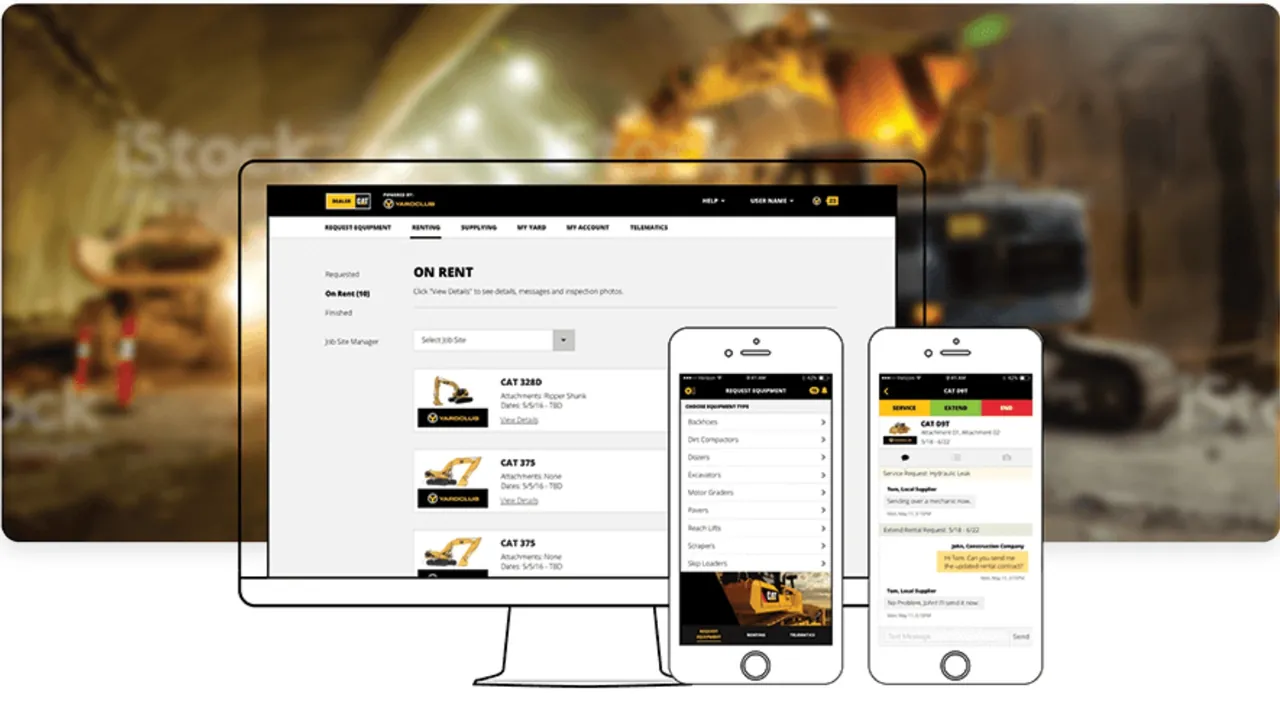
YardClub — a marketplace we built end to end, including its payments and transaction infrastructure, which processed $120M+ before Caterpillar acquired it. Money-movement engineering adjacent to banking, though not a regulated bank.

Production reliability · 200+ locations · 4 yrs

BJ's Restaurants — software critical to daily operations across 200+ locations; over four years we moved releases from every two weeks to twice a week with zero critical defects. The "ship fast, never break what operations depend on" standard a fraud engine or core-integration layer must meet.

Why build it with us.

01

The application layer, honestly scoped. We build the digital experiences, models, and pipelines on top of your core — not a chartered platform sold as a regulated product. A faster, lower-risk engagement with no overpromising.

02

Auditable and secure by design. In banking the audit trail and access controls are the product. We build inside the security gates and logging you already run, folding in DevSecOps from the start — not bolting compliance on at the end.

03

Models you can defend, validated on your data. We validate fraud, risk, and decisioning models against your historical record before they go live, with human-in-the-loop review on consequential decisions — because an unexplainable model is a liability, not a feature.

04

Founder-led, built to transfer. One accountable lead, not a relay of account managers; the code, models, and pipelines are assigned to you, with your team trained to run and examine them when we step back.

Related work

The capabilities a banking build draws on.

Fintech

For fintech and payments companies building new financial products — startups and scale-ups, where this page is for regulated banks on top of a core.

Fintech software →

Machine learning

The fraud, risk, and decisioning models — validated against your historical data, with human-in-the-loop on consequential calls.

ML development →

DevSecOps

Security and audit gates built into delivery from the first commit — the access controls and logging a banking system lives on.

DevSecOps services →

Questions buyers ask before they build.

Are you a core-banking platform or a regulated software vendor?+
No — we're a software engineering and AI firm that builds the application and intelligence layer banks run on top of their core: digital-banking experiences, fraud and risk models, regulatory-reporting pipelines, and servicing systems. We integrate with the core you already run rather than replacing it, and we don't sell a chartered core-banking platform as a regulated product. Keeping that boundary clear is part of why our engagements are fast and lower-risk; for a core platform itself we'll point you to the right vendor and build the layer around it.
Do you have banking clients we can reference?+
We'll be straight: our named case studies are not in banking. The closest financial-domain work is YardClub — a marketplace we built end to end, including its payments and transaction infrastructure ($120M+ processed, acquired by Caterpillar) — money-movement engineering adjacent to banking, though not a regulated bank. Our deepest production-reliability proof is BJ's Restaurants, a 200+ location operation held at zero critical defects for four years. For a first banking engagement we scope a contained pilot to prove the value before you commit — and the accountability is the founder's, in writing.
How do you handle our data, security, and regulatory constraints?+
The software runs in your own cloud or on-prem environment under your access controls; integrations to the core and systems of record are scoped, permissioned, and audit-logged; and every engagement starts with an NDA and a security review. We document every data path so your security, risk, and compliance teams can verify rather than trust, and we design within the regulatory constraints you operate under rather than discovering them late. We build the software and controls; your institution remains the accountable regulated entity.
How do you keep fraud and decisioning models trustworthy and explainable?+
We validate every model against your historical data before it goes live — measuring detection and false-positive rates on your own record, not a vendor benchmark — and we design human-in-the-loop review into the decisions that carry regulatory or customer-impact weight. Independent results show the upside is real: Mastercard reports its gen-AI fraud technology doubled compromised-card detection. An explainable, validated model is the only kind defensible in a regulated setting.
Can you modernize our legacy core without a risky rip-and-replace?+
Usually, yes — and incrementally. Rather than a big-bang core replacement, we expose the legacy core through APIs and a stable integration layer and modernize the brittle pieces a step at a time, so new digital products ship against modern interfaces while the system the bank runs on stays intact. Where a component is genuinely too brittle to build on, we'll be honest about it and scope the safest path rather than pretending the risk away.
How is this different from your fintech work?+
Our fintech page covers fintech and payments companies — startups and scale-ups building new financial products. This page is for banks and banking institutions: digital banking on top of a core, fraud and AML at a regulated institution's scale, examiner-ready regulatory reporting, and core-system modernization. The engineering rigor is shared; the regulatory weight, the legacy-core reality, and the examiner in the room are what set banking apart.
Who owns the software and the models when you're done?+
You do — completely. The applications, trained models, data pipelines, and audit artifacts transfer under full work-for-hire IP assignment signed at kickoff, and your team is trained to operate, retrain, and examine them. Keep us on a reduced retainer or take the keys; the engagement is built around the handover, not around locking you in.
How fast can we see something working, and what does it cost?+
Most engagements reach production in 4–8 weeks under a fixed-scope, ROI-tied model with one accountable lead, and we typically prove the metric on a contained pilot before scaling. Build cost depends on scope — our AI development cost guide gives real ranges — and we set the target metric at kickoff so the value is measured against a baseline rather than asserted at the end.

Thirty minutes · no pitch deck

Ready to ship banking software without risking money, data, or your license?

Bring the use case and the core you run — we'll tell you honestly what's worth building, how it integrates without replacing your core, and what metric we'd be judged on.

Book a 30-min scoping call → Email us