
In contact-center labor costs conversational AI is projected to cut by 2026.
Gartner ↗Service · AI
Assistants that do the work, not just answer the FAQ.
Chat and voice assistants that answer from your own data, act through your own systems, and hand off to a person the moment confidence drops — deployed where it pays, on OpenAI, Claude, or Gemini, inside your own cloud.
Fixed scopeOne accountable leadProduction in 4–8 weeks
YOUR DATA
YOUR SYSTEMS
GROUNDED + EVAL GATE
GROUNDTOOL USEVOICEESCALATE
The real problem
Why most enterprise chatbots get switched off.
Because they were demoed, not engineered — a scripted bot breaks on the question it wasn't shown, and a model bolted onto a help center invents a policy that doesn't exist.
The gap is never the model but the engineering around it: grounding in your real data, wiring to your systems, measuring whether it's right before customers find out it isn't, and knowing when to escalate.
More issues resolved per hour by agents using a generative-AI assistant.
Brynjolfsson, Li & Raymond ↗Where it deploys
Where enterprises deploy conversational AI — and what each delivers.
Not one product — a pattern that earns its keep in a handful of high-volume processes.
Customer support (tier-1 deflection)
Answers order status, account questions, troubleshooting, and returns 24/7, escalating only when genuinely complex. Faster responses, higher CSAT, lower cost.
IT service desk
Handles password resets, access requests, and first-line troubleshooting for employees. Employees unblocked in minutes, IT capacity reclaimed.
HR & employee self-service
Answers policy, benefits, payroll, PTO, and onboarding questions from your own HR knowledge base. Instant answers for staff, HR freed from repetitive Q&A.
Sales & lead qualification
Fields pre-sales questions, guides plan selection, and books meetings on your site. More qualified leads, no after-hours drop-off.
Post-purchase & operations
Processes returns, reorders, scheduling, and account changes, wired to your order and fulfillment systems so it does the task. Lower contact volume, higher retention.
Internal knowledge assistant
Lets frontline and multi-site staff query SOPs, manuals, and policy in plain language. Faster, more consistent frontline decisions, fewer errors.
Assistant
Grounded
Demoed, not engineered — that's why they get switched off. We ground in your data, wire to your systems, measure accuracy on a golden set before launch, and escalate the moment confidence drops.
As of June 2026 · revisit quarterly
What conversational AI does to those processes — the measured impact.
Independent industry findings — cited as third-party evidence, not Silicon Prime's own client results.
More issues resolved per hour. By support agents using a generative-AI assistant, in a peer-reviewed study of 5,000+ agents.
Brynjolfsson, Li & Raymond ↗In contact-center labor costs. Gartner projects conversational AI will cut by 2026.
Gartner ↗Median productivity gain. From agentic assistants that take actions, versus 40% for basic automation.
Stanford Digital Economy Lab, 2026 ↗What's included
What conversational AI development covers.
The difference between an assistant that ships and a chatbot that gets unplugged.
Use-case scoping & channel strategy
We map where an assistant pays off and which channels matter — with the honest "don't build this one" call included.
Retrieval grounding (RAG)
The assistant answers from your documents, policies, and product data — citing its source — with grounding accuracy measured against your content before launch.
Systems integration & tool use
We connect it to your CRM, ticketing, order, and knowledge systems through permissioned tool calls, inside the access controls your security team runs.
Voice & multilingual delivery
Where the use case calls for it, the same intelligence ships as a voice assistant and across the languages your customers speak.
Evaluation, guardrails & escalation
Before a customer sees it, the assistant is tested against a golden set built from your real conversations, with human-in-the-loop handoff designed in so it escalates instead of guessing.
Deployment, monitoring & enablement
We ship behind a staged rollout, instrument it for drift and cost, and train your team to maintain the evals and tune the prompts.
What you get — all assigned to you
- ✓A working assistant in your own cloud tenant
- ✓The evaluation suite and golden test set
- ✓The integration and tool layer
- ✓Transcripts-and-metrics dashboards
- ✓Runbooks and a trained team
- ✓Full work-for-hire IP transfer
How it runs
How a conversational AI engagement runs.
The same delivery model behind all our AI development work — one accountable lead, fixed scope, no handoffs.
- STEP 01
Discover
Scope the use case, channels, and the data the assistant must answer from.
Output: a ranked plan & the success metrics - STEP 02
Design
Build the evaluation set from your real conversations and choose the model on your workload.
Output: a golden test set & grounding architecture - STEP 03
Build
Develop in your own cloud tenant, wired to your systems through governed tools, with guardrails and escalation in place.
Output: a working assistant behind your controls - STEP 04
Deploy & enable
Shadow mode, then pilot, then wide — deflection and accuracy measured weekly, your team trained to operate it.
Output: a production assistant & a team that owns it


Track record
The discipline behind a system you put in front of customers.
Silicon Prime is a Stanford-rooted Responsible AI lab, founded in 2011, run by founder Kelvin Tran — 20+ years of production engineering, personally accountable for every engagement. We'll tell you plainly when a conversational interface is the wrong answer.
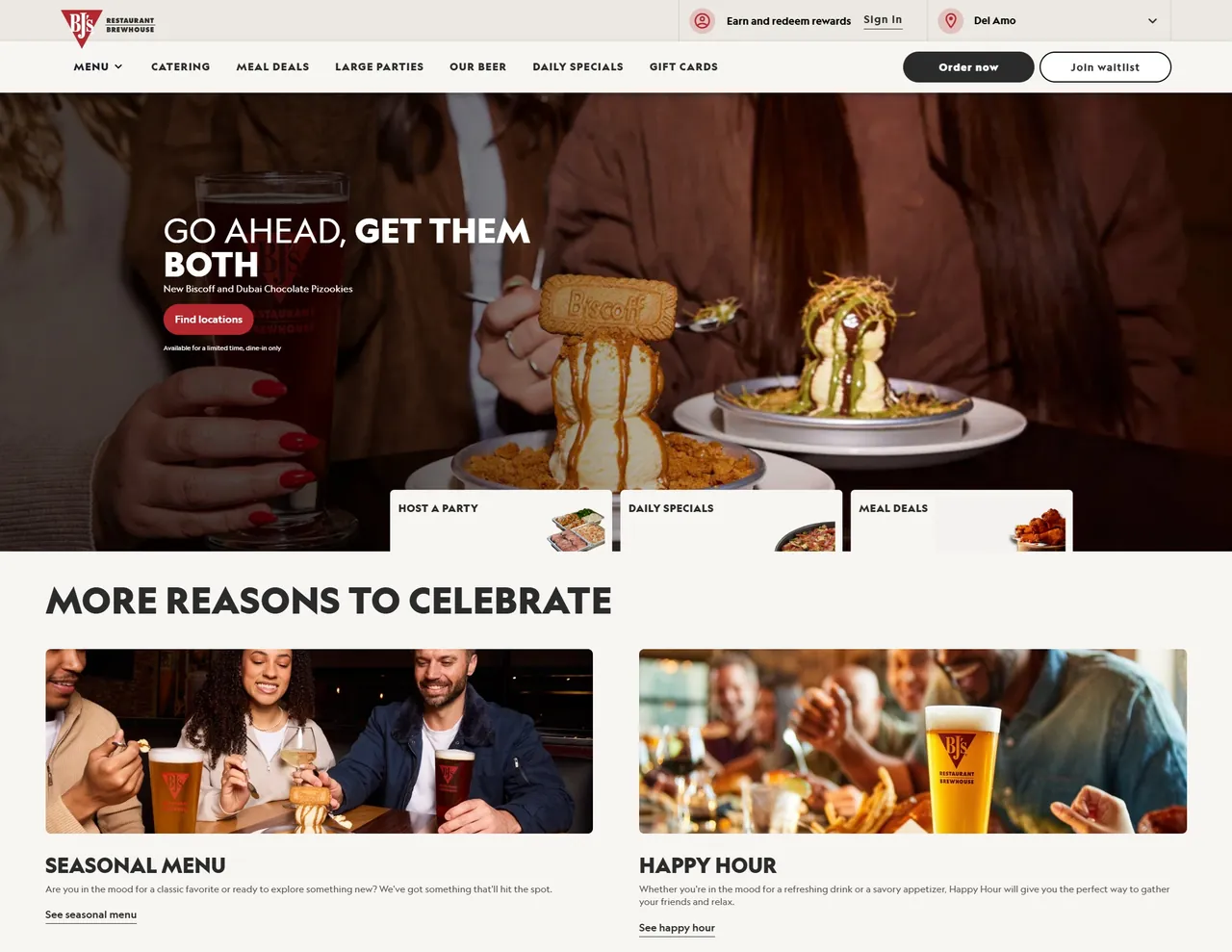
Production discipline · 200+ locations
A customer-facing assistant is only as reliable as the production discipline underneath it. The same process that holds BJ's Restaurants at twice-a-week releases with zero critical defects across four years is what we bring here — evals before launch, staged rollout, monitoring after.
Why build it with us.
01
Responsible AI is the founding charter.
Governance — what the assistant may say, when it must escalate, how it's audited — is the product, not an afterthought.
✓02
Engine-agnostic.
We benchmark OpenAI, Claude, and Gemini on your actual conversations and route to whichever wins.
✓03
Founder-led, one accountable lead.
No handoffs — the person who scopes it answers for it.
✓04
Built to transfer.
Prompts, evals, and code are assigned to you; your team is trained to run and extend it.
✓Where it earns its keep first
Where conversational AI earns its keep first.
Healthcare
Patient-engagement and intake assistants inside HIPAA-compliant architectures, every answer grounded and logged.
Healthcare software →Fintech
Support and servicing assistants where every response carries an audit trail and conservative, sourced answers.
Fintech software →Ecommerce
Shopping and post-purchase assistants answering from live catalog and order data.
Ecommerce software →Questions buyers ask before they build.
How is this different from the chatbot builder we tried?
A builder gives decision trees; we build an assistant that reasons over your real data and acts through your real systems. The difference shows on questions you didn't script for — a builder fails, a grounded assistant answers or escalates. The engineering that makes that reliable (retrieval, tool use, evals, escalation) is the work; the chat window is the easy 5%.
Why do most conversational AI pilots stall before production?
Most stall for operating-model reasons, not model quality — no path to your real systems, a static knowledge base, unmodeled run cost, and no single owner accountable in production. Gartner predicts over 40% of agentic AI projects will be canceled by the end of 2027 on escalating cost, unclear value, or weak risk controls (Gartner, June 2025). We engineer for production from day one — retrieval over your live data, permissioned tool use, an evaluation suite, and one accountable lead — so the assistant that passes the pilot is the one that ships.
How do you stop it from making things up?
Grounding plus measurement. The assistant answers only from your approved sources, every answer can cite where it came from, and we measure the hallucination rate against a golden set built from your real conversations before launch — then monitor it after. Where confidence is low, it escalates to a person rather than guessing.
Where does it actually get deployed?
Most often tier-1 customer support, IT service desk, HR self-service, sales qualification, and post-purchase operations — anywhere a high volume of repetitive requests is answered from data you already hold. We scope the use case first and decline the ones where a conversational interface isn't the right tool.
Which model do you build on?
Whichever wins your evaluation. We benchmark OpenAI, Claude, and Gemini on your real conversations during design and route accordingly — and because the system sits behind a model abstraction, switching later is a config change, not a rebuild.
How do you handle data security?
The assistant runs in your own cloud tenant under your access controls; integrations use scoped, permissioned tool calls; and every engagement starts with an NDA and a security review. Business API traffic to the major providers isn't used to train their models by default, and we document every data path so your team verifies rather than trusts.
Who owns the assistant when you're done?
IP ownership is defined in each engagement's contract, and we scope it so the assistant is yours to run — prompts, evaluation suites, and code hand over to your team, who we train to operate and extend it. Keep us on a reduced retainer or take the keys; the engagement is built around a clean handover, not lock-in.
What does it cost and how long does it take?
Most assistants reach production in 4–8 weeks under a fixed-scope engagement with one accountable lead. Build cost depends on scope — our AI development cost guide gives real ranges — and run cost is token economics we model before building, so the first invoice is a forecast you've already seen.
Thirty minutes · no pitch deck
Ready to build an assistant your customers actually trust?
Bring the use case — we'll tell you honestly whether a conversational interface fits, what it takes to build, and what it costs to run.