

A boring deploy is the best kind of engineering work we do, and almost nobody outside the team ever sees it. This is the story of how we turned releases at BJ's Restaurants from a held-breath event into a shrug, and why "nothing happened" is the outcome we now design for on purpose.
The Night Nothing Happened
I want to describe a Tuesday that mattered because of how little happened on it.
We pushed a change to the online ordering flow at BJ's Restaurants a little after 5pm Pacific, right as the dinner rush was starting to build on the East Coast. A couple of years earlier, that sentence would have made a room go quiet. Deploying into the front edge of peak dinner traffic used to be the kind of thing you scheduled for 2am, with three people on a call and a rollback plan taped to the wall.
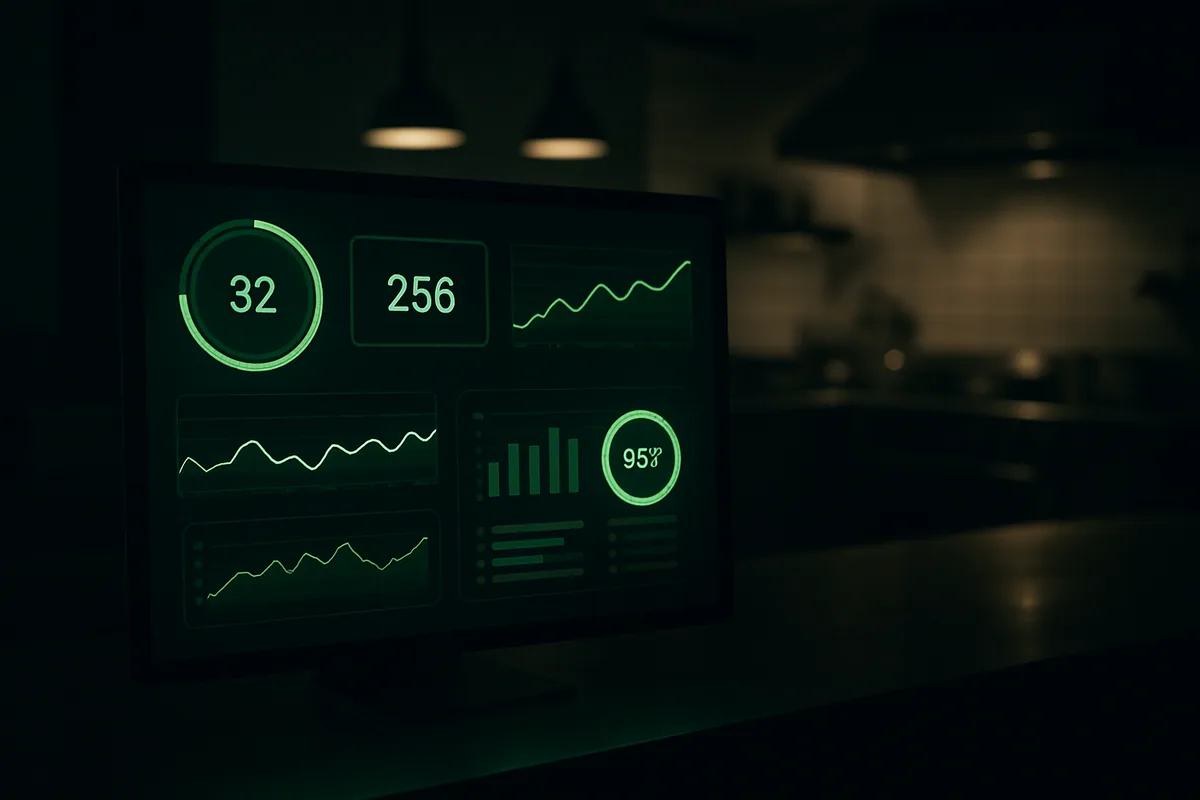
That Tuesday, one engineer shipped it between meetings. The graphs stayed flat. Orders kept flowing. Mobile Pay kept settling. Nobody paged anyone. The person who wrote the code went back to reviewing someone else's pull request. If you had walked past the on-call laptop, you would have seen a wall of steady green and assumed it was a slow day.
That is the whole point. The deploy was boring, and boring is what we were hired to build.
Key takeaways:
- A boring deploy is a design goal, not luck. Small changes, automated checks, and instant rollback are what remove the drama.
- Elite software teams deploy on demand and recover from a bad change in under an hour, according to Google's 2024 DORA report.
- Decoupling deploy from release lets you ship code at any hour and turn features on later, which is why peak-hour deploys stop being scary.
- The unglamorous work — monitoring, feature flags, and a tight daily health routine — is what buys the calm.
What a Boring Deploy Actually Means
"Boring" gets thrown around as a virtue in this corner of engineering, so it is worth saying what we actually mean.
A boring deploy is one where the act of shipping carries almost no risk, because you have moved all the risk somewhere you can control. The change is small enough to reason about. The pipeline has already run the tests, built the artifact, and pushed it to a staging environment that looks like production. If something is wrong, you find out in seconds, and you can undo it in one click. Nobody has to be a hero, because nothing depends on heroics.
Charity Majors, the CTO of Honeycomb, has argued for years that shipping code should be a regular, unremarkable occurrence rather than a rare high-stakes ceremony. Her framing that "deploys are the wrong way to change user experience" captures the shift: when a deploy is just moving bytes to a server, and a separate switch decides what customers actually see, the deploy itself stops being the dangerous part.
So the honest definition is this. A boring deploy is one you would happily do on a Friday afternoon, during dinner, without asking permission. Everything in the rest of this piece is about earning the right to be that relaxed.
The Problem We Were Handed at BJ's Restaurants
When we started working with BJ's Restaurants, the platform was not broken. It was busy, and it was carrying real money.
Guests order online, pay from their phones with Mobile Pay, split and settle tabs at the table through Open Check, and rack up rewards through the Beer Club program. On a Friday night, all of that happens at once across hundreds of locations. A checkout that fails for ninety seconds is not an abstract error rate. It is a family standing at a table wondering why their card will not go through, and a server who now has to apologize for something that is not their fault.
The teams before us had done the sensible thing that most teams do when releases feel dangerous. They made releases rare. Changes piled up between deploys, so every deploy carried weeks of accumulated risk at once. Bigger batches meant scarier deploys, which pushed releases even further apart. It is a doom loop we have watched more than one engineering org fall into, and the way out is counterintuitive: you deploy more often, not less.
Our job was to make shipping so routine that the platform could keep improving without anyone having to gamble the dinner rush to do it.
How We Made Deploys Boring
None of what follows is exotic. That is sort of the message. Boring deploys come from a handful of disciplines applied consistently, not from a clever tool nobody else has.
We shrank the batch size first. Instead of one large release every couple of weeks, changes go out in small, frequent increments. A small diff is easy to review, easy to reason about, and easy to revert. When something does go sideways, the blast radius is one modest change from an hour ago, not a mystery buried in three weeks of merged work.
Then we separated deploying from releasing. Code ships to production dark, wrapped in a feature flag, doing nothing visible. We turn it on for internal accounts, then a slice of real traffic, then everyone, and we can flip it back off in seconds without another deploy. This is the single biggest reason peak-hour shipping stopped being frightening. The risky moment is no longer the deploy at 5pm. It is the controlled flag change we make while watching the graphs, and that we can undo instantly.
The pipeline does the rest of the boring work. Every commit runs the test suite in CI, builds the artifact, and promotes it through staging automatically. A canary step routes a small share of traffic to the new version and compares its error and latency profile against the current one before the rollout continues. If the canary looks worse, the pipeline stops on its own and rolls back. No judgment call required at 5pm on a Tuesday.
| Old way (rare, scary releases) | Boring way (frequent, dull deploys) |
|---|---|
| Large batches shipped every few weeks | Small diffs shipped continuously |
| Deploy = release; users see it immediately | Deploy is dark; a feature flag controls release |
| Off-hours windows with a war-room on call | Any hour, one engineer, no ceremony |
| Rollback means a frantic re-deploy | Rollback is a flag flip or an automated revert |
| Confidence comes from hope | Confidence comes from the canary and the graphs |
The Monitoring That Lets Us Stay Calm
You cannot be relaxed about shipping if you cannot see what is happening. Calm is downstream of visibility.
The habit that holds the whole thing together is an unremarkable one: a daily monitoring routine the team runs every morning, before anyone touches new work. We read the platform's health the way a restaurant manager walks the floor before opening. Are online orders succeeding at the rate they should? Did Mobile Pay throw any new error types overnight? Is Open Check settling cleanly? Did HTTP 5xx counts or slow requests creep up after yesterday's changes? The point of doing it daily, even when nothing is wrong, is that you learn the shape of a normal day so well that an abnormal one is obvious the moment it starts.
Logs feed the same instinct. We watch the EAPI request logs for error spikes and slow endpoints, so a regression shows up as a small bump on a familiar chart rather than as an angry phone call. When a number moves in a way the daily read cannot explain, that is the trigger to dig in — pull the failing requests, find the pattern, and decide whether the last deploy is the cause before it becomes anyone else's problem.
| What we watch every day | Why it keeps deploys boring |
|---|---|
| Online order success and failure rate | The clearest signal that checkout still works for guests |
| Mobile Pay error types | New error strings after a deploy point straight at the change |
| Open Check settlement | Table payments failing is a same-night revenue problem |
| HTTP 5xx and slow-request counts | Early warning that a release stressed the system |
| Beer Club and rewards activity | Confirms loyalty flows survived the change |
The monitoring is not there to look impressive. It is there so that when we deploy at dinner, we already know within a minute or two whether the change was fine, and we usually knew it was going to be fine before we shipped it.
What the Research Says About Boring Deploys
This is not just our preference. The industry data has been pointing the same direction for a decade.
Google's DORA program has spent years measuring what separates the strongest software teams from the rest, and the headline is consistent. In the 2024 State of DevOps report, elite performers deploy on demand, keep the time from commit to production under a day, hold change failure rates around 5%, and recover from a failed change in under an hour. The gap between them and low performers is not small. Earlier DORA analysis found top teams deploying dramatically more often while also failing less often, which is the finding that surprises people who assume speed and safety trade off against each other.
They do not trade off. That is the part worth sitting with. Teams that ship frequently in small pieces are the same teams that break production least, because small changes are easier to verify, easier to roll back, and easier to understand when something does go wrong. Rare, heroic releases feel careful and are actually the riskier habit. Frequent, boring deploys feel reckless to people who have not tried them and are actually the safer one.
The DORA change-failure-rate figure of roughly 5% for elite teams is also a useful reality check. Boring does not mean nothing ever fails. It means failures are small, caught fast, and undone before most people notice. The goal is not zero incidents. It is incidents that stay boring too.
Boring Is Not Free
I do not want to make this sound like a switch you flip. Getting to boring took real investment, and it is worth being honest about the cost.
The strongest objection we hear from engineering leaders is that all this machinery — the pipeline, the canary, the feature-flag discipline, the monitoring — is overhead that a smaller team cannot afford. It is a fair worry. Building it does take time you could spend shipping features, and feature flags in particular add a kind of debt: every flag is a branch in your code that someone has to remember to clean up. Left unmanaged, flags become their own mess.
Our answer is that the overhead is real but it is front-loaded, and it pays back every single day afterward. You build the pipeline once. You establish the daily monitoring habit once. After that, the tax on each individual deploy drops close to zero, and the thing you stop paying for is the far larger cost of scary releases: the off-hours windows, the war rooms, the weekend incidents, the slow erosion of anyone wanting to ship at all. We treat flags as temporary by policy and remove them once a feature is fully live, which keeps the debt from accumulating.
For a platform handling live payments across hundreds of restaurants, the math is not close. The investment in boring is small next to one failed dinner rush.
Frequently asked questions
A boring deploy is one where shipping a change is uneventful: a small diff moves to production through an automated pipeline, a canary compares it against the current version, and monitoring stays flat. No off-hours window, no war room, no held breath. If something is wrong, an automated rollback or a feature-flag flip undoes it in seconds. The work that makes it boring — small batches, testing in CI, and observability — happens before the deploy, so the deploy itself carries almost no risk.
Because small, frequent changes are far easier to verify and reverse than large, rare ones. Google's [2024 DORA report](https://dora.dev/research/2024/dora-report/) found that elite teams deploy on demand and still keep change failure rates around 5% while recovering from failures in under an hour. Speed and stability reinforce each other: a tiny diff that breaks is obvious and quick to roll back, while a big release that breaks is a slow, painful hunt. Boring deploys shrink the size of each bet, so reliability goes up rather than down.
Yes, once you decouple deploying from releasing. We ship code to production during peak hours at BJ's Restaurants because the deploy itself changes nothing customers see — new code lands behind a feature flag, dark and inert. The actual release is a separate, controlled flag change we make while watching live graphs for online orders, Mobile Pay, and Open Check, and that we can reverse instantly. The dangerous old idea was that deploy equals release; separate them and peak-hour shipping becomes routine rather than a gamble on the dinner rush.
A deploy moves new code onto your servers. A release is the moment customers actually experience that code. Traditionally they are the same event, which is what makes deploys stressful. Separating them — usually with feature flags — means you can deploy any time, safely, and decide later and independently when to expose a change to users. This separation is the core idea behind boring deploys and the reason teams can ship many times a day without risking the user experience each time.
A feature flag lets you put code into production without turning it on. The deploy becomes a non-event because the new behavior is inert until you flip the switch, and you can flip it back off in seconds without another deploy. That converts the scary, all-at-once moment of a release into a gradual, reversible rollout: on for internal users, then a slice of traffic, then everyone. The cost is discipline — flags must be removed once a feature is fully live, or they pile up as technical debt.
Automated tests in CI are the first gate, but they are not the only one. A canary release routes a small share of real traffic to the new version and compares its error rate and latency against the current version before rolling out further; if it looks worse, the pipeline halts and rolls back automatically. Layered on top is production monitoring — for us, a daily health routine plus live watch on order success, payment errors, and 5xx rates — so a regression shows up as a small, catchable bump rather than an outage. Safety comes from small changes plus fast detection plus instant rollback, not from tests alone.
There is no fixed price or timeline — it scales with your starting point: how large your current release batches are, whether you already run CI, what test coverage and observability exist, whether you have a feature-flag system, and how many services and environments are in play. The payback is easier to size than the build. ITIC's [2024 downtime survey](https://itic-corp.com/itic-2024-hourly-cost-of-downtime-report/) found a single hour of downtime now costs more than $300,000 for over 90% of mid-size and large enterprises, so avoiding even a few bad releases usually dwarfs the front-loaded investment in pipeline, flags, and monitoring. We scope the work to your existing setup rather than rebuilding from scratch.
Pick a partner who ships in your real production environment, not one who hands you a slide deck. Ask for concrete examples of decoupling deploy from release, canary or progressive rollout, automated rollback, and the monitoring that backs each deploy. Confirm they leave you owning the pipeline, feature flags, and runbooks instead of locked into them. At Silicon Prime we build and operate these capabilities directly, and structure each engagement so the resulting pipeline, IP, and operational know-how stay with your team.
Most stall because teams automate the pipeline but never decouple deploy from release, so every deploy is still a user-facing event that needs a window and a war room. Others lack the observability to trust a change and slow down out of fear, or they let feature flags accumulate as debt until the system is fragile. Elite continuous-delivery performance is still reached by only a minority of teams, according to Google's [2024 DORA report](https://dora.dev/research/2024/dora-report/). Boring deploys come from batch size, decoupling, monitoring, and flag hygiene applied together — not from a single tool.
Further Reading
- Google DORA — 2024 State of DevOps Report
- Charity Majors — Deploys Are the Wrong Way to Change User Experience
Ready to Make Your Deploys Boring?
Silicon Prime builds and maintains production platforms that ship safely, at any hour, without drama. If releases still feel like an event at your company, we can help you make them dull.
Comments