

Your cloud estate probably didn't get complex all at once. It happened one product launch at a time, one urgent integration, one regional deployment, one "temporary" account that nobody ever closed. Now the team that was supposed to drive revenue spends its week chasing alerts, reviewing spend anomalies, fixing access drift, and answering the same operational questions again and again. This article looks at why cloud environments get complex, what cloud infrastructure management services actually do, and why a managed partnership can be worth it.

The Growing Complexity of Modern Cloud Environments
Small teams get the benefit the cloud was sold on. Provision in minutes, test an idea without a hardware order, ship a workload without a procurement queue in the way.
Scale flips the trade. Speed turns into sprawl, sprawl into inconsistency, and inconsistency is where the risk, the wasted spend, and the daily grind actually live. An architecture diagram won't show you any of it, so it stays invisible until something breaks.
One market signal is worth naming. Cloud operations stopped being a phase companies pass through; industry reports point to continued strong growth in the cloud infrastructure services market. The operating layer is here to stay.
Why complexity grows faster than expected
A handful of patterns repeat across nearly every estate.
| Pattern | How it starts | What it leaves behind |
|---|---|---|
| Additions under pressure | A new region, vendor, or application ships fast | Governance arrives late, or never |
| Local optimization | Platform, security, finance, and product each make sensible calls | Those calls don't line up across the estate |
| Temporary that stays | Test environments, emergency permissions, one-off scripts | They quietly become load-bearing |
The fallout is predictable. Leaders burn time asking who owns what, why costs moved, whether controls hold, and how much risk they're carrying. That is exactly where cloud infrastructure management services earn their place.
What Are Cloud Infrastructure Management Services
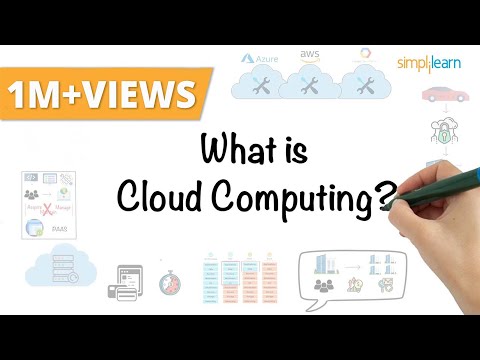
Cloud infrastructure management services are the operating layer that keeps a cloud environment reliable, secure, cost-aware, and aligned to policy once the initial deployment is done. This is not the same as renting raw cloud resources. It sits above those resources and makes them workable at scale.
Think of it as digital property management
If your company owns a portfolio of buildings, owning them isn't the hard part. Someone still has to handle maintenance, access, compliance, utilities, tenant issues, upgrades, and the occasional emergency at 2am.
Cloud is the same. Your infrastructure might run in AWS, Azure, Google Cloud, a private environment, or some mix of all of them. Ownership doesn't run it. Someone still has to:
| Job | What it covers |
|---|---|
| Monitor performance | Workloads, dependencies, logs, and alerts, watched in real time |
| Control costs | Tag resources, review waste, right-size environments, allocate spend accurately |
| Enforce security | Identities, permissions, patching, secrets, baseline controls |
| Automate routine work | Consistent provisioning, policy applied as code, less manual drift |
| Support operations | Investigate incidents, run the runbooks, keep services available |
Where these services sit in the stack
Most organizations run across several service layers, and management has to cover all of them.
| Layer | What it provides | What management services do |
|---|---|---|
| IaaS | Compute, storage, networking, virtual machines | Provisioning, monitoring, patching, access control, backup, cost governance |
| PaaS | Managed runtime platforms and developer services | Configuration oversight, policy enforcement, integration management, usage review |
| CaaS | Container platforms and orchestration environments | Cluster operations, workload scaling, deployment controls, observability, security posture |
The practical point is that cloud infrastructure management services create a unified control model across these layers. Without it, you end up with one set of rules for virtual machines, another for containers, and a third for managed services. That is when outages get harder to diagnose and policy gets hard to trust.
Why a Managed Partnership Unlocks Business Value
A managed model works when it gives leadership more control, not less. That sounds backwards until you've lived the alternative. In-house teams often own the cloud on paper but spend so much time on operational chores that real strategic control slips away anyway.
The good ones lift the load without taking the decisions. You keep architecture direction, security posture, risk tolerance, and business priorities. The partner absorbs the repeatable, high-consequence work that keeps those decisions running every day.
Focus returns to the product team
Engineering talent is expensive and hard to replace. Spending it on routine upkeep, the same weekly triage, or manual compliance checks a machine could run is a waste of it.
Hand the run layer to a capable partner and that time comes back. It goes into shipping product, meaning the features, integrations, and customer-facing changes people actually notice. It goes into architecture, refactoring brittle services, modernizing pipelines, retiring technical debt. And it backs the growth work, whether that is new markets, acquisitions, AI workloads, or data-heavy services.
Cost, security, and execution improve together
Cost optimization in the cloud isn't a finance line item. It rests on architecture quality, environment hygiene, clear ownership, and deployment discipline, and a managed partner turns each of those from a heroic effort into a routine one.
Security runs on the same logic. In the cloud it is operational work that renewing an annual statement of intent won't cover. Identity controls, patching, configuration baselines, secret handling, backup integrity, and audit readiness each need someone owning them in the moment.
Execution steadies too, because the work stops ping-ponging between teams. Runbooks route the issues. Alerts have owners. Changes follow set procedures. Leadership gets cleaner reporting and fewer surprises.
Here is a useful test. Does the relationship feel like delegated accountability, or just outsourced labor? If it's outsourced labor, you're still carrying most of the mental load internally. If it's delegated accountability, the partner behaves like an extension of your operations leadership and protects your team's attention. That is the gap between buying hours and using a true managed application services partner.
Anatomy of a World-Class Management Service
These services aren't built to one standard. Some providers stop at ticket handling and after-hours escalation. The strong ones run the environment with discipline and real automation, and carry enough technical depth to kill recurring problems at the root instead of swatting each instance.
What strong operators put in place
Quality shows first in proactive monitoring. The provider isn't waiting on a business user to flag a break. The platform is instrumented, the alerts are tuned, logs and metrics are wired to thresholds that mean something, and escalation paths track how critical each service is.
Next is automation with intent. Nobody is automating to look busy. The riskiest manual work goes first: provisioning, patching, policy enforcement, backup workflows, routine remediation. Infrastructure as code carries the weight here, giving the team a repeatable system of record.
Past that, a serious service tends to cover a consistent set of ground:
| Capability | What it covers |
|---|---|
| Operational observability | Metrics, logs, tracing, alert tuning, a real view of service health |
| Cost governance | Tagging discipline, budget ownership, waste reviews, placement decisions |
| Security operations | Access reviews, patch baselines, secrets handling, vulnerability response, guardrails |
| Resilience planning | Backup validation, recovery procedures, environment redundancy, failover runbooks |
| Expert support | Engineers who troubleshoot infrastructure rather than forward the ticket |
| Compliance alignment | Policy enforcement, evidence collection, auditable change practices |
Why interoperability matters
Plenty of organizations now run more than one cloud, more than one orchestration layer, and more than one operational toolchain. That is why interoperability matters. If your management model only works inside one vendor's worldview, your governance gets fragile the moment the environment grows past that vendor.
The DMTF Cloud Management Initiative exists to promote standards for interoperable cloud infrastructure management, including standardized management interfaces and policy models. The aim is to make governance and automation more portable across environments. That reduces configuration drift and lowers the risk of getting trapped inside one control plane.
A world-class provider knows the stack may include Terraform, Kubernetes, native cloud controls, SIEM platforms, backup systems, and internal workflow tools. Their job is to make those pieces behave like one governed system. That is how overhead drops and release confidence goes up.
The AI Revolution in Cloud Operations
AI has a job in cloud operations, and a narrow one: the problems people can't solve consistently once scale gets large. Aimed there, it surfaces anomalies sooner, routes issues with more judgment, thins out noisy alerts, and floats resource changes, all without spawning another dashboard nobody opens.
AI is useful when it removes operational drag
Data isn't what most cloud teams lack. Context and action are. The metrics exist. So do the logs and the security signals. The bottleneck is turning that pile into timely calls without wearing the team down.
The applications that earn their keep stay narrow:
| Application | What it does |
|---|---|
| Signal reduction | Groups related events so one incident isn't triaged five different ways |
| Pattern detection | Catches configuration drift, odd behavior, or a demand shift before it becomes an outage |
| Operational assistance | Backs up runbooks, summarizes incident context, speeds team handoffs |
| Cost insight | Flags inefficient usage before waste becomes the new normal |
Handled badly, AI is one more layer of noise. Handled well, it amplifies engineers who already know what they're doing.
What proof of work should look like
When a provider claims AI, ask what changed in the operating model because of it. "We use AI" proves nothing. Proof is more consistent workflows, more structured incident response, shorter review cycles, or operational knowledge that gets captured and reused instead of living in one person's head.
The best implementations keep people in charge. AI sharpens detection, recommendation, and execution support. Engineers hold authority over anything that touches production and over the policy boundaries themselves.
How to Select the Right Cloud Management Partner
By the time most organizations go looking for a partner, they already know the cloud is too important to run informally. The harder question is who can manage it without creating a fresh dependency problem.
Start with the shape of the modern estate. Studies suggest that over 85% of enterprises use a multi-cloud strategy and that the average organization uses more than five different cloud services, which is exactly why governance, tagging, cost allocation, and security controls get harder to maintain across environments. If your environment already spans multiple platforms, or will soon, evaluation has to center on how a partner handles that complexity. Hours of support coverage is the smaller question.
Questions that expose real capability
Lead with scenarios rather than feature checklists. Any provider will claim monitoring, automation, and security support. Far fewer can walk you through inheriting an environment with weak tagging, inconsistent IAM, and runbooks that barely exist.
Ask questions like these:
- How do you establish operational visibility in an inherited environment?
- What do you standardize first when governance is inconsistent?
- How do you handle multi-cloud policy enforcement without relying on one vendor's native tooling?
- What's your process for cost allocation when ownership is unclear?
- How do you document and improve runbooks over time?
What a healthy partnership looks like
A strong partner is upfront about boundaries. They spell out what they own, what stays with your team, how escalations run, and which calls need business sign-off before anything moves. Weigh five areas:
| Evaluation area | What good looks like | Warning sign |
|---|---|---|
| Technical depth | Comfortable across cloud platforms, containers, IaC, security, and observability | Narrow expertise tied to one toolset |
| Operating discipline | Clear runbooks, change management, incident workflows, and reporting cadence | Heavy reliance on heroics |
| Commercial clarity | Understandable pricing, ownership definitions, and service boundaries | Vague packaging and surprise charges |
| Governance maturity | Tagging, access control, policy enforcement, audit readiness | “We can figure that out later” |
| Working style | Collaborative, direct, and accountable | Defensive or opaque communication |
A capable partner welcomes executive scrutiny. They don't get defensive about service levels, reporting, or who is responsible for what. Mature operators expect those questions, because they already treat governance as part of the service.
Your Roadmap to a Hands-Free Cloud Environment
Hands-free doesn't retire leadership. It ends leadership carrying work that should be systematized and handed off. A structured path beats a rushed handoff every time.
A practical transition path
Phase one is discovery and assessment. The incoming team walks the accounts, workloads, access models, network patterns, deployment processes, tooling, and cost visibility. Not for a giant slide deck. For an honest read on the current state.
Phase two is strategy and operating design. Ownership gets nailed down: governance standards, runbooks, alert ownership, backup policies, escalation paths, automation priorities. Leadership sets the direction; the partner turns it into an operating model.
Phase three is implementation and takeover. Monitoring gets tuned, access gets cleaned up, automation comes in, documentation improves. The provider picks up core operational duties and starts pulling risk out of the inherited environment.
What you own and what your partner owns
Phase four is steady-state management and optimization, where the value compounds. Reviews turn strategic once the basics are settled. The partner runs the platform continuously, and leadership works the roadmap, the investment priorities, and the risk calls. The division of labor that holds up is straightforward:
| Owner | What they carry |
|---|---|
| You | Product direction, compliance requirements, risk tolerance, architecture choices, where the budget goes |
| Your partner | Monitoring, maintenance, operational response, cloud hygiene, optimization routines, day-to-day reliability |
| Shared | Quarterly reviews, roadmap alignment, tooling changes, decisions about how you scale next |
Frequently asked questions
Cloud infrastructure management services are the ongoing operating layer that keeps a cloud environment reliable, secure, cost-aware, and policy-aligned after the initial deployment. They sit above raw cloud resources across IaaS, PaaS, and container platforms, handling monitoring, cost governance, security enforcement, automation, and incident response so an environment stays workable at scale.
There is no flat rate; cost is driven by scope. The main variables are estate size and number of cloud accounts, how many providers you run (single vs. multi-cloud), workload criticality and required support hours, current governance maturity, and how much remediation an inherited environment needs up front. This matters because 84% of organizations rank managing cloud spend as their top cloud challenge and budgets run about 17% over plan ([Flexera 2025 State of the Cloud](https://www.flexera.com/about-us/press-center/new-flexera-report-finds-84-percent-of-organizations-struggle-to-manage-cloud-spend)), so a good partner should price against measurable waste reduction, not just hours.
Evaluate on complexity-handling, not hourly coverage. Ask scenario questions: how they establish visibility in an inherited environment, what they standardize first when governance is inconsistent, and how they enforce policy across multiple clouds without leaning on one vendor's native tooling. This is decisive because 73% of organizations now run hybrid estates and multi-cloud adoption keeps rising ([Flexera 2026 State of the Cloud](https://www.flexera.com/about-us/press-center/flexera-finds-cloud-value-is-rising-while-ai-waste-grows)). Weigh technical depth, operating discipline, commercial clarity, and governance maturity, and treat vague packaging or defensiveness as warning signs.
Plan for a phased transition rather than a single cutover, and let scope set the pace. A typical path runs discovery and assessment, then strategy and operating design, then implementation and takeover, and finally steady-state management. The variables that move the timeline are estate size, tagging and IAM hygiene in the current environment, documentation quality, and compliance requirements. A weakly governed, multi-cloud estate takes longer to stabilize than a clean single-cloud one, so a credible partner scopes the ramp instead of promising an instant handoff.
Complexity compounds from three patterns: services added under delivery pressure before governance catches up, local optimizations by platform, security, finance, and product teams that never line up across the estate, and "temporary" environments or permissions that quietly become load-bearing. The financial cost is real, wasted cloud spend rose to 29% in 2026, its first increase in five years, driven by AI and new IaaS/PaaS services ([Flexera 2026 State of the Cloud](https://www.flexera.com/about-us/press-center/flexera-finds-cloud-value-is-rising-while-ai-waste-grows)). None of it shows up in an architecture diagram, so it stays invisible until something breaks or a bill spikes.
The difference is delegated accountability versus outsourced labor. A strong operator instruments the platform, tunes alerts, and automates the riskiest manual work (provisioning, patching, policy, backups) rather than waiting for a business user to report a break. Look for proactive monitoring, infrastructure-as-code as a system of record, clear runbooks, and a provider who welcomes executive scrutiny of service levels and ownership. If you still carry most of the operational mental load internally, you bought hours, not management.
AI works best on the narrow problems people cannot solve consistently at scale: grouping related alerts so one incident is not triaged five ways, detecting configuration drift or demand shifts before they become outages, summarizing incident context to speed handoffs, and flagging inefficient spend before waste becomes normal. The strongest implementations keep engineers in charge of anything touching production. When a provider claims AI, ask what changed in the operating model, more consistent workflows and shorter review cycles are proof; "we use AI" is not.
Yes. Silicon Prime is a US-based engineering partner, and our model is delegated accountability, not decisions taken away from you. You keep architecture direction, security posture, risk tolerance, compliance requirements, and where the budget goes; we absorb the repeatable, high-consequence run work, monitoring, cost hygiene, security operations, and day-to-day reliability, and build a unified control model across IaaS, PaaS, and container layers. Ownership boundaries and any per-engagement IP terms are defined explicitly at the start, so scrutiny is expected, not resisted.
Further Reading
- Cloud Infrastructure Services | Synergy Research Group
- End-to-End Cloud Infrastructure Management Services - NelsonHall
- Uptime Institute Intelligence
Ready to Build with AI?
Contact Silicon Prime — we help companies design and ship production-grade AI products.
Comments