The intelligence layer — agent planning, machine-data pipelines, and safety gates for systems that act in the physical world.
We don’t build robots — we build what makes them worth deploying. Silicon Prime engineers the software intelligence layer of physical AI: LLM planning layers over your robots and machine fleets, telemetry and perception-data pipelines, predictive maintenance, digital-twin software, and the evaluation harnesses and human approval gates that keep autonomous behavior inside limits you set.
Your hardware and integrators stay. Fixed scope, one accountable lead, every artifact assigned to you.
We build judgment, not robotsOne accountable leadEvery action gated
What is physical AI — and which layer of it do we build?
Two kinds of company carry this label. We’re unambiguously the second — the planning, data, and governance software above your hardware.
Physical AI is artificial intelligence whose output is an action rather than an answer — software that perceives an environment through sensors, decides what to do, and executes that decision through machines: robots, vehicles, equipment, and industrial controls.
Because its mistakes land in the physical world instead of on a screen, physical AI is as much an evaluation and safety problem as it is a modeling problem.
The term went mainstream when NVIDIA made it the centerpiece of its robotics push — its CEO called this era “the ChatGPT moment for general robotics” at CES in January 2025.
Two kinds of company now sell under the label: robot builders, and intelligence-layer builders. We are the second, drawing on our LLM development practice.
The physical AI stack — and our boundary in it, drawn in writing
Each offering carries its stack-layer tag from the table above — so you can see exactly where our work stops and your hardware vendors’ work begins. Nothing below requires replacing the machines or integrators you already trust.
LAYER 03
LLM & agent planning for robotic and IoT systems
The judgment layer over your machines: natural-language instruction parsing, task decomposition into machine-executable steps, and human approval gates on every consequential action — agentic AI with its hands bound until evals say otherwise.
Its hands stay bound until the evals say otherwise.
LAYER 02
Perception-data & telemetry pipelines
Sensor streams, fleet telemetry, and machine logs landed, structured, and made model-ready — the unglamorous plumbing every planning layer stands on, built with unit economics designed for sensor-scale volume.
The unglamorous plumbing every planning layer stands on.
LAYER 03
Predictive maintenance from operational logs
Failure prediction and maintenance scheduling built from the telemetry your equipment already emits — starting from your data as it is, not from a sensor retrofit you’d need two budgets to approve.
From your data as it is — not a retrofit you’d need two budgets to approve.
LAYER 04
Evaluation harnesses & safety gates for autonomous behavior
Evals before actuation: golden scenario sets, regression suites, and staged-autonomy gates that decide what a system may do next. The discipline that has held a 200+ location restaurant chain — physical operations running on software — at zero critical defects across four years.
Physical operations on software, held at zero critical defects across four years.
LAYER 03
Digital-twin software & simulation data plumbing
The software side of the twin, stated honestly: state models, twin dashboards, and the data interfaces that feed simulation — we build the mirror and its plumbing, not the physics engine.
We build the mirror and its plumbing — not the physics engine.
LAYER 04
Governance for systems that act in the physical world
The Responsible AI layer where blast radius makes it non-optional: acceptable-action policy, named human owners, decision audit trails — institutionalized org-wide through an AI Center of Excellence when you’re ready.
Where blast radius makes governance non-optional, not a checkbox.
In software, a bad output is a ticket. In the physical world, it has a blast radius.
Independent industry findings on the machines and the failure rate now being pointed at them — cited as third-party evidence, not Silicon Prime’s own client results.
The machines are already deployed — the IFR’s World Robotics census counts more than four million industrial robots in operation worldwide — and the new generation of models is being pointed at them.
What hasn’t caught up is the discipline: RAND Corporation puts the AI project failure rate above 80% in the purely digital world, where a bad output costs a ticket and a retry. Point that same failure rate at equipment, vehicles, and production lines and the economics invert — the intelligence layer, the evaluation gate, and the decision audit trail stop being best practice and become the difference between a deployment and an incident report.
That layer is the entire scope of what we sell, and it’s why a Responsible AI lab fits this work unusually well.
4M+
industrial robots in operation worldwide — the machines are already deployed, and models are being pointed at them.
IFR World Robotics · verified June 2026
>80%
AI project failure rate in the purely digital world — where a bad output costs only a ticket and a retry.
RAND Corporation · verified June 2026
Point that failure rate at machines and the gate stops being best practice — it becomes the line between a deployment and an incident report.
Why a software lab belongs in the machine world
Silicon Prime is a Stanford-rooted Responsible AI lab, founded 2011, run by founder Kelvin Tran — 20+ years of production engineering, including multimillion-dollar systems delivered for one of the world’s largest automobile manufacturers, the industry that industrialized automation. He answers personally for every engagement.
01
Responsible AI is the founding charter. Governance for blast-radius systems isn’t our add-on — it’s the reason the lab exists. When the output is an action, this stops being philosophy and starts being scope.
02
We claim only the layer we own. No robot photos, no fabricated fleet deployments, a boundary drawn in writing. A vendor who claims the robot, the AI, and the cloud is overclaiming at least one of them.
03
Aegis AI delivery discipline. Evals before actuation, staged rollouts, production monitoring — the Aegis AI process applied where the cost of a regression is measured in downtime, not tickets.
04
The people stay in the loop. Operators, technicians, and engineers working alongside these systems get trained and kept in the decision path — our Human-Led AI practice, not an afterthought clause.
Our physical-AI record, stated precisely
We’ll be straight about it: we haven’t shipped a robot, and this page won’t pretend otherwise. Most case-study walls under the “physical AI” banner are software apps wearing a hard hat anyway. What we have is the record that actually transfers — production software the physical-equipment economy trusted with real money.
Heavy construction equipment · marketplace · acquired 2017
YardClub — the software layer under heavy machinery
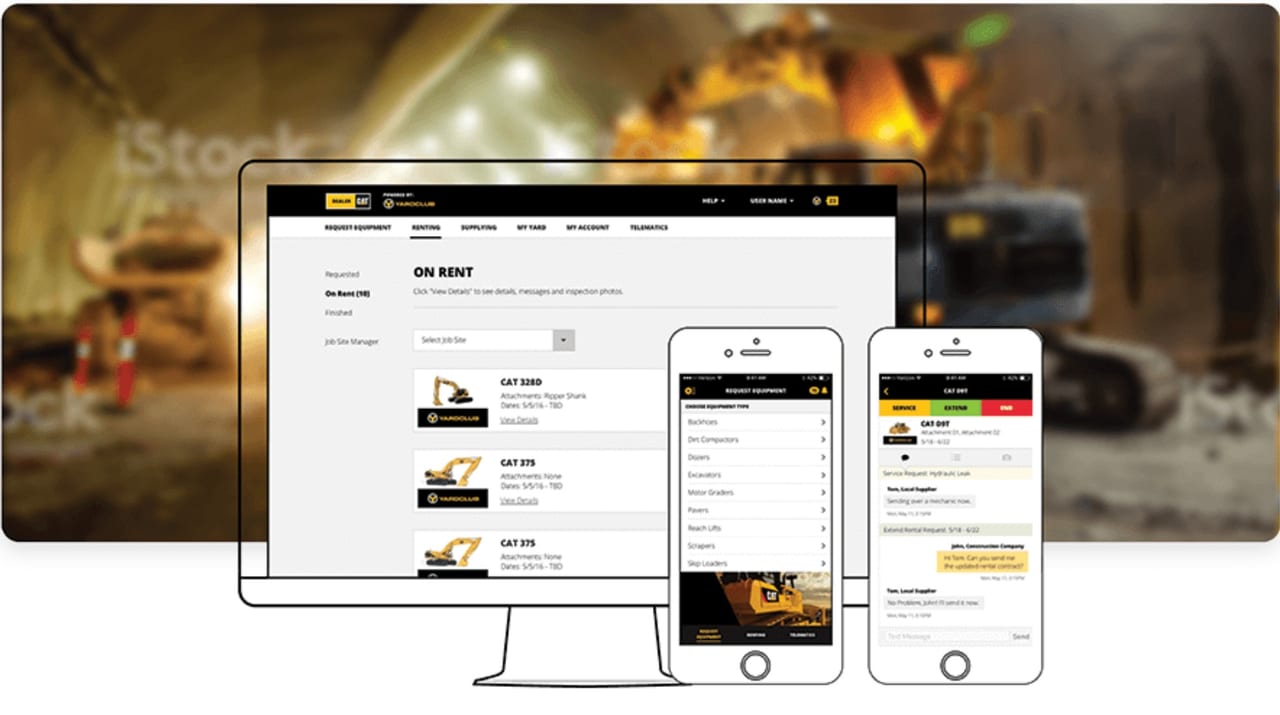
A contractor-to-contractor marketplace where the inventory was excavators and loaders, not SKUs. We built the listings, payments, and transaction infrastructure end to end under full IP assignment; it processed $120M+ in transactions before Caterpillar — one of the most physical companies on earth — acquired it in 2017. Every physical AI deployment needs exactly that layer underneath it: production software that physical operations trust with real money and real machines.
Silicon Prime is a Stanford-rooted Responsible AI lab, founded in 2011, run by founder Kelvin Tran — 20+ years of production engineering, personally accountable for every engagement. Bring the machines; we’ll bring the judgment layer. When a use case shouldn’t be autonomous, we’ll tell you — which a vendor paid to ship robots won’t.
How an LLM is allowed to touch a machine
Autonomy is climbed, never granted. Every system we build starts at the bottom rung and earns each promotion with evaluation evidence and a named human sign-off — so capability never outruns demonstrated trust.
Rung 01
Shadow
The planning layer runs against live telemetry and logs what it would have done — compared daily against what your operators actually did. Disagreements become eval cases, not incidents. The model watches; it actuates nothing.
Output: the model watches · actuates nothing
Rung 02
Suggest
The system proposes; your people dispose. Acceptance rate, override patterns, and near-miss flags get measured — the evidence file that justifies (or blocks) the next rung.
Output: recommendations to a human operator
Rung 03
Approve
The model plans multi-step work; every consequential action waits on a human-in-the-loop approval. Latency drops, control doesn’t.
Output: the model plans · a human approves each action
Rung 04
Act, with audit
Autonomous action inside hard limits — bounded scopes, rate caps, kill-switches, and a decision audit trail with a named human owner. The rung most vendors start at; the rung we finish at.
Output: bounded autonomy · kill-switch · named owner
Where the frameworks fit: Our controls are designed and mapped to SOC 2 Type II, ISO/IEC 27001:2022, and ISO/IEC 42001:2023, with NIST’s AI Risk Management Framework and the EU AI Act as mapping targets where they apply to you. Functional-safety standards for the machines themselves — IEC 61508, ISO 10218 — remain the domain of your safety engineers and hardware vendors; our layer produces the evaluation evidence and decision audit trail their certification work consumes.
Five places the intelligence layer pays first
Operating environments where the machines and the telemetry already exist — and the gap is the software that turns them into decisions.
Industrial manufacturing & process plants
Agent planning over production and maintenance data, downtime-log intelligence, and predictive maintenance from the telemetry your lines already emit — every recommendation gated through the autonomy ladder.
Logistics, warehousing & fulfillment
The physical backbone of ecommerce: AMR fleet coordination data, exception triage, and slotting intelligence — the planning layer over robots your integrator already installed.
Energy & field operations
Inspection-data intelligence, field-service copilots over equipment manuals and telemetry, and maintenance prioritization where a missed signal is measured in outages.
Construction & heavy equipment
Fleet telemetry, utilization intelligence, and equipment-marketplace systems — the domain where our field record above was earned.
Food-service & multi-site operations
Software running physical operations at scale is home turf: we’ve kept a 200+ location restaurant business — BJ’s Restaurants — shipping twice a week for four years with zero critical defects, across kitchens, not codebases alone.
How does a physical AI engagement work at Silicon Prime?
Five stages, the boundary contract first — because the fastest way to fail in this domain is two vendors who each think the other owns the gap.
Stage 01
Scope the layer
What hardware and integrators exist, what software we own, where the interfaces sit — written down before anything is built. Runs as our AI readiness assessment, including the use cases we’d advise against.
Output: boundary contract + ranked use cases
Stage 02
Ground in telemetry
An audit of what your machines already emit versus what the planning layer needs — because models that act need ground truth, and most fleets log more of it than anyone has structured.
Output: data baseline + gap map
Stage 03
Build behind the gate
The intelligence layer and its evaluation harness are built as one deliverable — golden scenarios from your real operations, regression suites, and the gate logic that decides what the system may do. Nothing reaches actuation ungated.
Output: planning layer + eval harness, together
Stage 04
Stage the autonomy
Shadow, suggest, approve, act — the system climbs the autonomy gate one rung at a time, each promotion backed by eval evidence and signed by the operations owner who lives with the consequences.
Output: rung-by-rung promotion, signed
Stage 05
Operate & hand over
Drift detection, incident playbooks, and operator training — your team learns to read the evals and run the gates. Stay on retainer or take the keys; the handover is designed in from stage one.
Output: monitoring + a team that runs it
The boundary contract comes first — two vendors who each think the other owns the gap is how this domain fails.
Questions buyers ask before hiring
Straight answers — including the one most vendors dodge.
01What is a physical AI company — and which kind is Silicon Prime?+
Two kinds operate under the label: companies that build the machines, and companies that build the intelligence directing them. Silicon Prime is the second kind — we engineer the planning, data, evaluation, and governance software that decides what a machine should do and proves it’s safe before it does it. Your robots, sensors, and integrators stay exactly where they are; our work sits above them.
02Do you build robots or hardware?+
No — and we put that in writing on this page. No robot hardware, no actuators, no firmware, no sensor design, no motion control. We build the software intelligence layer above your hardware vendors and systems integrators, and we coordinate with them at the interfaces. If what you need is a machine built, we’re the wrong vendor and we’ll tell you so on the first call.
03How can an LLM safely control a physical system?+
By never letting it start in control. Our systems climb a four-rung autonomy gate — shadow, suggest, approve, act — where each promotion requires evaluation evidence from your real operations and a named human sign-off. Hard limits, kill-switches, and decision audit trails bound the top rung. The honest answer is that most deployments should live at rungs two and three far longer than the demos suggest — and ours are designed to.
04What data do we need before agent planning or predictive maintenance is feasible?+
Less than you fear, but it must be grounded: the telemetry, logs, and maintenance records your equipment already produces are usually enough to start — stage two of every engagement audits exactly what exists against what the use case needs, before you spend on new sensors. The common gap isn’t missing data; it’s years of telemetry nobody ever structured for models to use.
05How do you handle safety standards and liability?+
By respecting the division of labor. Functional safety for the machines — IEC 61508, ISO 10218, emergency stops, certified hardware interlocks — remains with your safety engineers and equipment vendors, where it belongs. Our layer is designed and mapped to SOC 2 Type II, ISO/IEC 27001:2022, ISO/IEC 42001:2023, NIST’s AI RMF, and the EU AI Act as applicable, and produces the evaluation evidence and decision audit trail your safety case consumes.
06Who owns the code, models, and IP?+
You do — every pipeline, planning layer, eval suite, and dashboard transfers under full work-for-hire IP assignment signed at kickoff. The one exception is our underlying Aegis AI methodology, which is patent-pending and licensed to you for use within your organization. Your machine data never leaves the boundary you set; we work inside your cloud tenant under your access controls.
07What does it cost, and how long does it take?+
Engagements run fixed scope with one accountable lead and typically reach steady state in 4–8 weeks per phase — the boundary contract and telemetry audit first, the planning layer and eval harness next, autonomy staged after that. Build costs follow our published AI development cost guide; run costs are dominated by data volume and get modeled before we build, not discovered on an invoice.
Thirty minutes · No pitch deck
Have machines that need better judgment?
Bring your fleet, your telemetry, and the workflow you wish ran itself — we’ll tell you honestly which layer of the problem is ours, which belongs to your hardware vendors, and what the first gated deployment looks like.
Silicon Prime is an independent engineering firm. We build the software intelligence layer of physical AI systems; robot hardware, actuation, firmware, and functional-safety certification remain with clients’ hardware vendors and systems integrators. NVIDIA is a trademark of NVIDIA Corporation; references to NVIDIA describe the public origin of the term “physical AI” and imply no affiliation. References to compliance and safety frameworks describe how we design controls; they are not certification claims except where shown in the certification band above. Statistics cited are from the named public sources (IFR World Robotics; RAND Corporation), verified June 2026.