SPrime AI
SERVICE · LLM DEVELOPMENT

LLM development services

On OpenAI, Anthropic & Google — built for production, owned by you.

We design, build, and ship copilots, retrieval systems, AI agents, and integrations into the software you already run — on whichever of the three frontier engines your workload actually needs.

Fixed scope, a single accountable lead, deployment in your own cloud tenant. Steady state in 4–8 weeks.

Fixed scope One accountable lead Steady state in 4–8 weeks

From use case to production-grade LLM system

Calling a model API is a sprint; everything below is the actual product. These are the nine offerings an LLM development company has to deliver end to end — and the nine we scope, price, and build.

01

LLM strategy & use-case discovery

A frank readiness assessment that ranks your candidate use cases by ROI and feasibility — including the ones we recommend you don’t build.

02

Custom LLM application development

Full applications with an LLM at the core — built on your stack and business logic, not a generic wrapper around a foundation model.

03

RAG & knowledge systems

Retrieval over your documents, policies, and product data — grounding measured before launch, hallucination rate reported as a number, every answer citing its source.

04

AI agents & agentic workflows

Agents that execute multi-step work — triage, research, reconciliation — with scoped tools, staged autonomy, and human approval gates where actions have consequences.

05

Chatbot & copilot development

Customer-facing assistants and internal copilots wired into your real systems — with deflection and adoption targets agreed up front and measured weekly.

06

LLM integration into existing products

AI features added to the software you already sell or run — structured outputs into your APIs, model abstraction so a vendor swap never forces a rebuild.

07

Workflow & document automation

Extraction, classification, and enrichment at volume — schema-validated outputs, batch processing where latency doesn’t matter, unit economics designed before the first invoice.

08

LLM-powered data analytics

Natural-language access to your warehouse — governed query generation, row-level security respected, every answer traceable to the query that produced it.

09

Evaluation, optimization & scaling

Golden test sets, regression evals, drift monitoring, and cost tuning — the layer that turns each new model release into a free upgrade instead of a rebuild.

Every offering ships with — the same delivery discipline behind all our AI development work

  • Evaluation suites built from your real data
  • Full documentation and runbooks
  • Your team trained to run it
  • Deployment in your own cloud tenant
  • Model abstraction so a vendor swap is a config change
  • Full work-for-hire IP assignment

One team, fluent in all three frontier platforms

Engine choice is an engineering decision — we benchmark on your workload, not on hype. Most agencies pick a lane; our practice covers all three, because the honest answer to “which model?” changes by task. The strongest architectures often route between them: a Haiku-tier triage step feeding a GPT‑5 reasoning pass, with Gemini covering the multimodal lane.

01 / OPENAI — GPT-5.5 · GPT-5.4 · CODEX

The most widely adopted platform in enterprise surveys

OpenAI shipped GPT‑5.5 six weeks after GPT‑5.4 — frontier capability on a software-update cadence. We build so each release lands as an upgrade, not a rewrite. Customer copilots with deflection measured weekly, GPT‑5.4-class agents that operate software permissioned and audited, and high-volume pipelines with mini-tier routing designed in from day one. Runs in: OpenAI API · Azure OpenAI.

Example: a Haiku-tier triage step feeds a GPT‑5 reasoning pass — the cheap tier handles volume, the frontier tier only the hard cases.

02 / ANTHROPIC — OPUS 4.8 · SONNET 4.6 · HAIKU 4.5

The engine enterprises trust with long-running agents

Claude’s current Opus and Sonnet tiers carry a 1-million-token context window at standard pricing and excel at multi-step work that has to explain itself afterward. Long-horizon workflow agents with full audit trails, MCP tool servers reusable across every client, and whole-archive document intelligence — contract portfolios and codebases read in a single 1M-token pass. Runs in: Claude API · Bedrock · Vertex · Foundry.

Example: a contract portfolio or an entire codebase is read in one 1M-token pass — no chunking, no retrieval gymnastics.

03 / GOOGLE — GEMINI 3 · 3.5 FLASH · 3.5 PRO

Multimodal depth, built where your data already lives

Gemini reads text, audio, images, video, PDFs, and code repositories in one model — with up to 2M tokens of context announced for the 3.5 family and 3.5 Flash GA since May 2026. Video and audio intelligence natively, warehouse-grounded analytics from BigQuery under the IAM your team already audits, and Flash-economics document processing at high volume. Runs in: Your GCP project · Vertex AI.

Example: footage review, call QA, and a searchable media archive run from one model — no separate vision, speech, and text stacks to stitch.

Independence note. We hold no partnership, reseller, or referral relationship with OpenAI, Anthropic, or Google — our cloud and developer-program certifications are infrastructure credentials, separate from model-vendor commercial ties. The recommendation you get is the one your evaluation results earn; nobody pays us to steer it.

Field data · Independent sources · Verified June 2026

Everyone has the same three engines. Outcomes still diverge wildly.

The failure numbers below aren’t model problems — GPT‑5, Claude, and Gemini are extraordinary. They’re implementation problems: no evaluation harness, no grounding in real data, workflows designed around the technology instead of the people running it. We’ve documented the full pattern in why enterprise AI projects fail. That gap is exactly what you’re hiring — not access to models you could rent yourself, but the engineering that turns them into systems your business runs on. Cited as third-party evidence, not Silicon Prime’s own client results.

42%

of corporate AI initiatives yield zero ROI — a failure-context stat, framed as an implementation problem, not a model problem.

BEAM.AI, 2024
80%+

overall AI project failure rate — twice that of non-AI IT projects.

RAND Corp.
61%

of enterprises report no EBIT impact from AI at all.

McKinsey, 2025

The model stopped being the differentiator the day everyone could rent it — implementation is the whole game now.

What you actually get when you hire us

Silicon Prime is a Stanford-rooted Responsible AI lab, founded 2011, run by founder Kelvin Tran — who is personally accountable for every engagement. The four commitments below aren’t marketing; they’re how the contract is written.

W/01

Fixed scope, one accountable lead. A dedicated pod under a single lead who is your only point of contact. No account managers, no handoffs, no scope drift invoiced as “discovery.”

W/02

Payment tied to ROI. Success metrics are defined numerically before we build, and our payment structure is tied to hitting them — we carry delivery risk with you.

W/03

Engine-agnostic by design. Evals before prompts, abstraction over every model API. A vendor swap is a config change — so our recommendation never has to protect our own architecture.

W/04

Your people, more capable. Per our Responsible AI model, every engagement trains your team to operate and extend the system — the capability stays when we leave.

How does LLM development work at Silicon Prime?

Four stages, the same shape every time — because the discipline is the product. Most engagements reach production steady-state in 4–8 weeks; what varies is scope, never the gates.

Step 01

Discover

Stage one inventories the workflows, data estate, and team readiness behind each candidate use case, then ranks the list by ROI and feasibility — including the use cases we’d decline to build, said out loud, with reasons. Our AI consulting practice runs this stage standalone.

Output: ranked use-case map · weeks 1–2

Step 02

Design

Before the first prompt: a golden test set built from your real data, numeric success metrics, and a benchmark of GPT‑5, Claude, and Gemini tiers against your actual tasks. The engine recommendation comes out of that data — with the routing plan that sends volume to cheap tiers and hard cases to frontier models.

Output: engine choice + eval harness

Step 03

Build

Development happens inside your own tenant — OpenAI or Azure OpenAI, Claude direct or via AWS Bedrock, Gemini in your GCP project — under your SSO, logging, and data-retention controls. Business API traffic isn’t used to train these vendors’ models by default, and we document every data path. Full IP assignment is signed at kickoff.

Output: working system in your tenant

Step 04

Ship & scale

Shadow mode first, then a pilot group, then wide — with human-in-the-loop gates wherever the system acts on the world. Your team is trained on eval maintenance, prompt management, and cost tuning; runbooks and the full eval suite are handed over with 30 days of overlap support, or the pod stays on retainer.

Output: production launch + trained team

The discipline is the product — the same shape every time, so the gates never bend even when the scope does.

LLM systems shaped by your industry’s constraints

From regulated healthcare and banking to asset-heavy energy, manufacturing, and defense — the constraint set changes by industry, and the LLM system has to be built to it: the compliance regime, the data shapes, the cost of a wrong answer. Twenty-eight sectors we build for, each with the use cases we’d start from — three carrying named, public-record proof below.

Healthcare

Clinical documentation support, prior-auth and claims processing, and patient-engagement assistants inside HIPAA-compliant tenants. Healthcare software →

Fintech

KYC and onboarding document extraction, compliance review, and fraud-investigation copilots with regulator-ready audit trails. Fintech software →

Banking

Customer-service assistants and policy intelligence built to banking security standards — because a confident wrong answer is the costliest output there is.

Insurance

Claims intake at volume, policy-document Q&A, and underwriting copilots that cite the clause they relied on.

Ecommerce & retail

Catalog enrichment, conversational shopping assistants, review intelligence, and support deflection measured weekly. Ecommerce software →

SaaS & technology

In-product copilots and natural-language features that ship behind your SLA, with token economics that protect your margin. SaaS development →

Restaurants

Guest ordering and reservation assistants, plus menu and content operations across hundreds of locations. Proof: BJ’s, 200+ locations — see Proof.

Sports

Athlete and coach copilots, and training-content generation with expert review in the loop. Proof: Bridge Athletic — see Proof.

Fitness

Member-engagement and habit-coaching assistants for platforms where retention is the whole business.

Education

Tutoring assistants with guardrails, curriculum content with educator review, and admissions and admin automation.

Travel & hospitality

Booking and itinerary assistants, multilingual guest support, and review intelligence across properties.

Real estate

Listing-content generation, lease and contract abstraction, and buyer-qualification assistants.

Construction

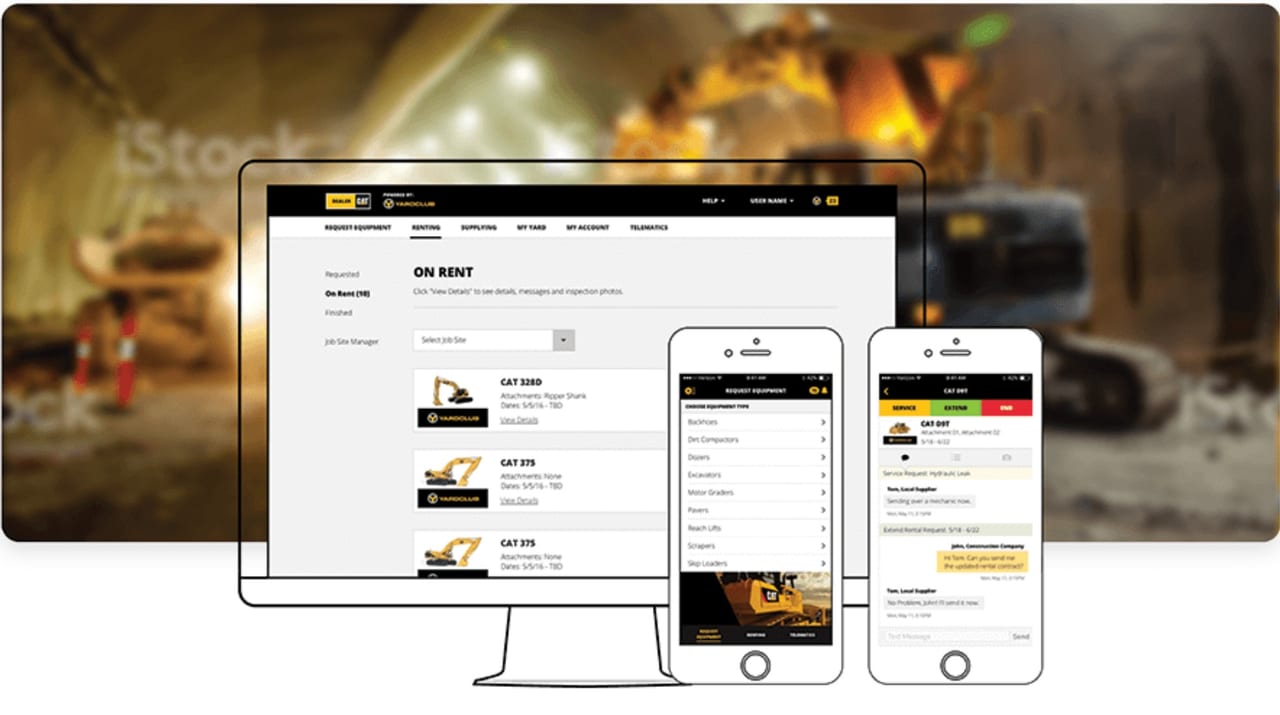
Bid and RFP document intelligence, safety-compliance review, and equipment-marketplace systems. Proof: YardClub — see Proof.

Logistics & supply chain

Shipment-exception triage, BOL and customs documentation automation, and carrier-communication assistants.

Industrial manufacturing

Maintenance-manual Q&A on the factory floor, downtime-log intelligence, and supplier-document automation.

Energy & utilities

Field-service copilots over equipment manuals, outage communications, and regulatory-filing automation.

Oil & gas

Inspection-report intelligence, HSE-compliance document review, and operations-log analysis at field scale.

Petrochemical

Safety-data-sheet intelligence, batch-record review, and plant-scale compliance documentation.

Aerospace & defense

Technical-manual intelligence and maintenance copilots, designed for controlled and air-gapped environments.

Telecom

Support deflection at carrier scale, network-log triage, and plan-recommendation assistants.

Social media

Moderation assistance at volume, creator copilots, and trust-and-safety triage with humans on every edge case.

Physical AI & robotics

LLM planning layers for robotic systems: instruction parsing, task decomposition, and human approval gates.

Legal & professional services

Contract review at portfolio scale and research with citations — a 1M-token window reads the whole data room.

Media & entertainment

Archive search across video and audio, metadata generation, and rights-document intelligence.

Automotive & mobility

In-vehicle and dealer-support assistants, plus warranty-claim document processing.

Government & public sector

Citizen-service assistants, records processing, and request triage — auditability designed in first.

HR & talent

Policy Q&A, job-content generation, and screening assistance, with bias evals as a release gate.

Marketing & advertising

On-brand content generation with review workflows, campaign summarization, and audience research.
The track record behind the promise

LLM systems live or die on production discipline — so judge ours. Three named clients, three different kinds of difficulty, all public record.

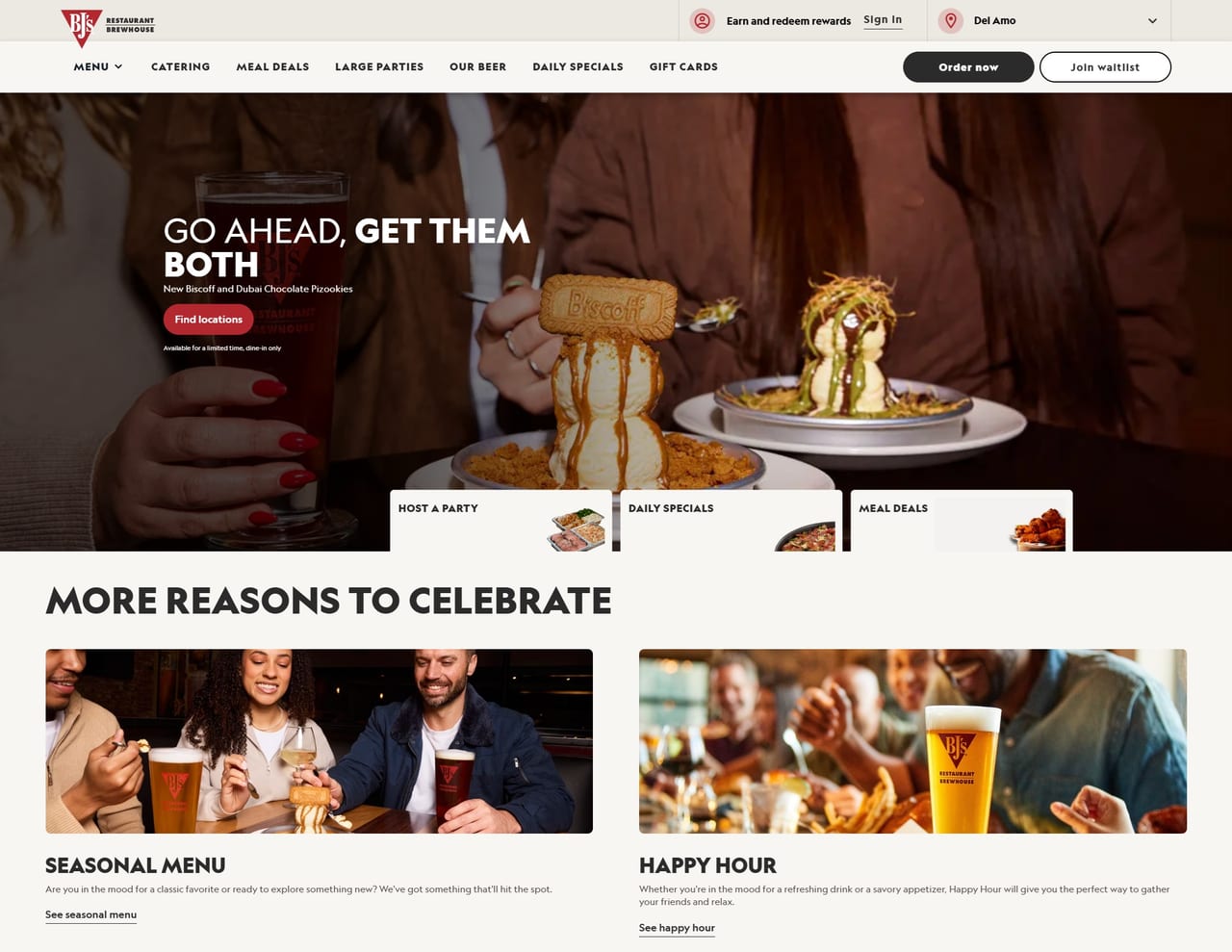
BJ’s Restaurants — guest-facing web platform
Restaurants · 200+ locations · 4+ years

BJ’s Restaurants

Production discipline is the muscle LLM systems depend on, and this is ours at work: over 4+ years, our AI-optimized Aegis AI process took a 200+ location business from releasing every two weeks to twice a week — with zero critical defects sustained.

bjsrestaurants.com
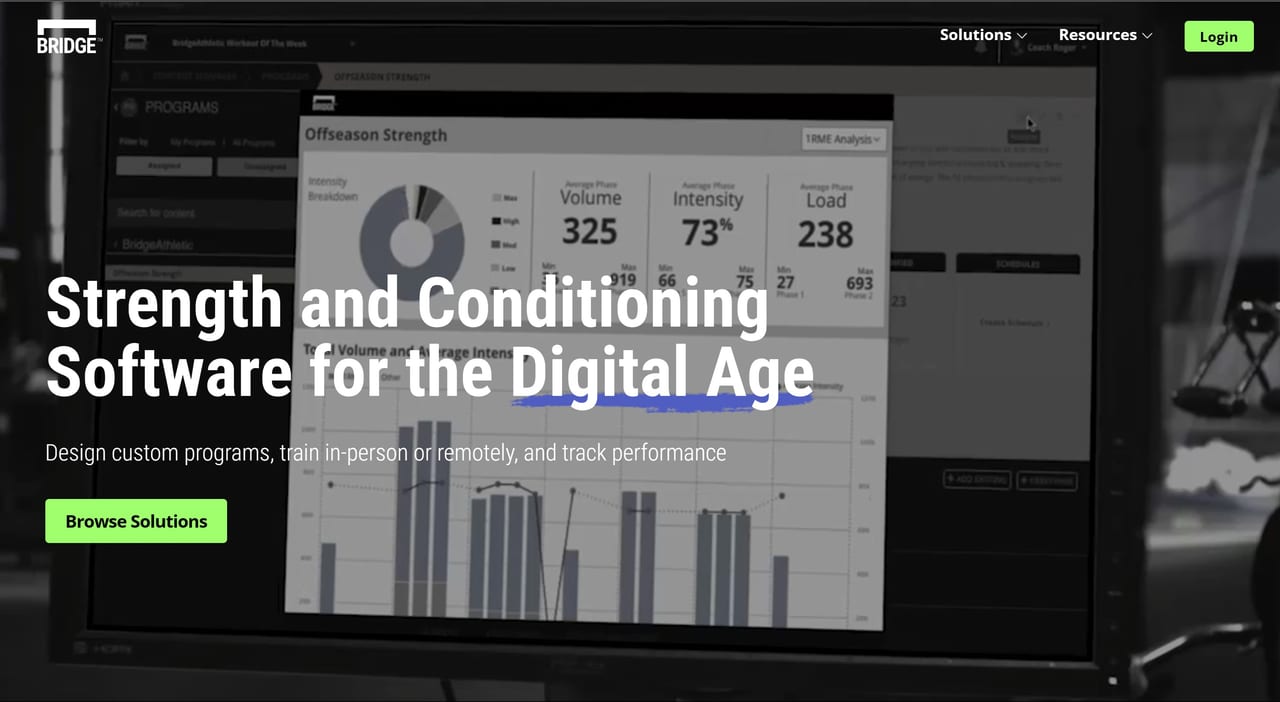
Bridge Athletic — strength and conditioning platform
Sports tech · since 2012

Bridge Athletic

Proof we stay for the whole product life, not just the launch: we shipped Bridge Athletic’s first product as a 2012 startup and carried it through twelve years of modernization — into the strength & conditioning platform now used by USC, the LA Rams, and MLB and MLS teams.

bridgeathletic.com
YardClub — heavy equipment rental marketplace
Marketplace · payments · acquired

YardClub

Proof we build complete commercial systems end to end: a contractor-to-contractor marketplace for heavy construction equipment — listings, payments, transaction infrastructure — that processed $120M+ in transactions before Caterpillar acquired it in 2017.

Read the acquisition story

Silicon Prime is a Stanford-rooted Responsible AI lab, founded in 2011, run by founder Kelvin Tran — personally accountable for every engagement. Your LLM project deserves the same discipline. When a use case shouldn’t be built, we’ll tell you that too. Book a strategy call →

The questions buyers ask before hiring

Straight answers — the same ones you’d get on the call.

The one your evaluation results pick — and often a mix. Across the three platforms, OpenAI’s GPT‑5 family leads on breadth and agentic computer-use, Claude on long-horizon agent and large-context work, and Gemini on multimodal and BigQuery-adjacent workloads. Stage two of every engagement benchmarks all three on your actual tasks, so the choice is data you own, not anyone’s opinion.

No — deliberately. We hold no partnership, reseller margin, or referral arrangement with any model vendor, which means our engine recommendation has no commission behind it. Our cloud and developer-program certifications (AWS, Microsoft, Google Developers) are infrastructure credentials, separate from model-vendor commercial relationships. We implement all three platforms and switch when evals say switch — you get no partner-program discounts through us, and no advice bent by one.

Everything runs in your own tenant — OpenAI/Azure OpenAI, Claude via the API or AWS Bedrock, or Gemini inside your GCP project — under your SSO, logging, and retention controls. All three vendors’ enterprise terms state business API traffic isn’t used for model training by default. Every engagement starts with an NDA and a security review, and we document each data path so your team verifies instead of trusting.

You do — completely. Every line of code, prompt, evaluation suite, and design asset transfers under a full work-for-hire IP assignment signed at kickoff. The only thing Silicon Prime retains is our underlying Aegis AI methodology, which is patent-pending and licensed to you for use within your organization for the lifetime of what we build.

Typical engagements reach steady state in 4–8 weeks, depending on scope and integration complexity. You get a dedicated pod — a delivery lead, AI engineers, a PM/BA, a designer, and QA — under one accountable lead as your single point of contact. Prefer to keep delivery in-house? Our AI staff augmentation model embeds the same engineers into your existing team instead.

Two budgets: build and run. Build cost depends on scope — our AI development cost guide publishes the real ranges we quote. Run cost is token economics, and it’s designable: routing volume traffic to mini/Flash/Haiku tiers and batching non-urgent work typically cuts inference spend dramatically. We model your run-rate before building, so the first invoice is a forecast you’ve already approved.

Your choice, designed in from day one. Some clients keep the pod on a reduced retainer for model upgrades, eval maintenance, and cost tuning — the same shape as our managed application services. Others take full ownership at handover: runbooks, documentation, the eval suite, and 30 days of overlap support. The best signal an engagement worked is that you don’t need us anymore.

Thirty minutes · No pitch deck

Ready to put an LLM to work — properly?

Bring the use case — we’ll tell you honestly which engine fits it, what it takes to build, and what it costs to run at your volume. If it shouldn’t be built, we’ll tell you that too.