Autonomous agents that complete multi-step work, under your control.
We build AI agents that take a goal, break it into steps, use your systems to carry them out, and stop for a human before anything irreversible.
Not a chatbot that answers — an agent that acts: plans a task, calls the right tools, checks its own work, and escalates when it isn’t sure. Built with staged autonomy and hard approval gates, on whichever model fits the job, inside your own cloud. Fixed scope, one accountable lead, production in 4–8 weeks.
Fixed scopeOne accountable leadProduction in 4–8 weeks
Why do most agentic AI projects stall before production?
Because a demo agent and a production agent are different animals. A weekend prototype that books one meeting looks magical; the same loop, turned loose on real workflows, takes a wrong step at hour two, calls a tool it shouldn’t, and quietly corrupts a record no one notices until a customer does. So it never leaves the sandbox.
The gap is never the model’s reasoning — frontier models plan and use tools remarkably well. The gap is the engineering that makes an autonomous system safe to trust: decomposing the task into checkable steps, constraining what each tool call may do, measuring whether the agent succeeds before it touches production, and inserting a human exactly where a mistake is expensive.
That surrounding system is agentic AI development — and it’s what decides whether the agent ever earns the keys.
Where enterprises actually deploy AI agents — and what each one does
An agent earns its place in workflows that are multi-step, repetitive, and currently eat skilled hours. For each, what it does, the benefit it produces, and how that plays out:
01
Customer-operations agents (resolve, don’t just answer)
Take a request end to end — look up the order, process the return, issue the credit, update the record — instead of handing the customer a scripted reply. Benefit — lower handle time and contact volume, with resolution instead of deflection.
Example: a “cancel and refund my duplicate order” request is finished inside the chat — verified, voided, confirmed — so a five-minute multi-screen task takes seconds and never becomes a callback.
02
Software-engineering agents (the build pipeline)
Triage failing tests, draft fixes, open pull requests, run the regression suite, and flag what needs human review — under the same review gates a senior engineer would demand. Benefit — faster cycle time on routine engineering toil, with quality held at the gate. McKinsey reports software-engineering and IT functions seeing 10–20% cost reductions from AI (McKinsey, 2025).
Example: a flaky test that would have sat in the backlog gets a proposed fix and a passing CI run waiting for a reviewer by morning — the human approves, not investigates from scratch.
03
Back-office & finance agents (invoice-to-record)
Read an invoice, match it to the purchase order, flag the exception, and post the clean ones — with anything ambiguous routed to a person. Benefit — lower cost-per-transaction and fewer manual-entry errors on high-volume processes.
Example: 400 routine invoices reconcile overnight and the 12 genuine mismatches land in an analyst’s queue with the discrepancy already explained — so the team works the exceptions, not the pile.
04
IT operations & remediation agents
Investigate an alert, gather the diagnostics, attempt a known safe remediation, and escalate with a written summary if it can’t resolve it. Benefit — shorter mean-time-to-resolution on common incidents and fewer 2 a.m. pages for toil.
Example: a disk-space alert is diagnosed and a safe cleanup runs automatically, the on-call engineer paged only if it recurs — a routine wake-up becomes a logged, resolved event.
05
Research & analysis agents
Decompose a question, pull from multiple internal and approved external sources, cross-check the findings, and assemble a cited brief. Benefit — analyst hours redirected from gathering to judgment, with traceable sourcing.
Example: a due-diligence brief that took an analyst a day is drafted with every claim linked to its source, so the human spends the time verifying and deciding, not collecting.
06
Multi-agent workflows (orchestrated specialists)
Several narrow agents — a planner, a retriever, a writer, a checker — coordinated so each does one job well and a supervisor catches the handoffs. Benefit — reliability on complex tasks a single do-everything agent fumbles.
Example: in a document pipeline one agent extracts, a second validates against policy, and a third only then commits — so an error is caught at validation, not after it is written.
As of June 2026 · Revisit quarterly
What agentic AI is doing to enterprise work — the measured impact
Independent industry findings on the technology, cited as third-party evidence — not Silicon Prime’s own client results.
33%
of enterprise software apps will include agentic AI by 2028 — up from under 1% in 2024. Agents move from novelty to default infrastructure inside three years.
We instrument task-success, intervention rate, and cost-per-task from the first pilot — against the targets set at kickoff.
What agentic AI development covers
The scope below is the difference between an agent that earns trust and a prototype that never leaves the sandbox.
01
Use-case scoping and autonomy mapping
We find the workflows where an agent genuinely pays off, then decide how much autonomy each step should have — suggest-only, act-with-approval, or bounded-autonomous — run as part of our AI readiness assessment, with the honest “this one should stay a human task” call included.
02
Task decomposition and planning
We break the goal into discrete, checkable steps the agent can plan over and a reviewer can audit — so “complete the task” becomes a sequence you can inspect, not a black box that either works or doesn’t.
03
Governed tool use and integration
The agent acts through structured, permissioned calls into your CRM, ticketing, code, and data systems — each tool scoped to exactly what its step allows, read access deliberately separated from write, inside the access controls your security team already runs.
04
Human approval gates and staged autonomy
Irreversible or high-cost actions stop for a human; low-risk ones run unattended. We start an agent low on the autonomy ladder and raise it only as the evidence earns it — human-in-the-loop by design, not as a bolt-on.
05
Multi-agent orchestration
Where one agent overreaches, we split the work across coordinated specialists with a supervising layer that validates handoffs and catches a failed step before it propagates.
06
Agent evaluation and guardrails
Before an agent touches production, it’s tested against a task suite built from your real cases — success rate, tool-call correctness, failure and refusal behavior, the actions that must never fire. Evals are the gate, not an afterthought.
07
Deployment, monitoring, and enablement
We ship behind shadow mode then a staged rollout, instrument every run for cost, drift, and intervention rate, and train your team to read traces, maintain the evals, and widen autonomy as confidence grows.
What you get when you hire us — all assigned to you
A working agent in your own cloud tenant
The evaluation harness and task suite
The governed tool and integration layer
The autonomy/approval policy as a documented charter
Run traces and a cost-and-intervention dashboard
Runbooks and a trained team
How an agentic AI engagement runs
The same delivery model behind all our AI development work, tuned for autonomous agents — one accountable lead, fixed scope, no handoffs.
Step 01
Discover
Scope the workflow, map where the agent acts versus where a human signs off, and agree the success metrics we’ll be judged on.
Output: a ranked plan & an autonomy policy
Step 02
Design
Build the evaluation suite from your real cases and choose the model on your tasks, not on hype.
Output: an agent task suite & a tool/integration architecture
Step 03
Build
Develop the agent in your own cloud tenant, wired to your systems through governed, permissioned tools, with approval gates and guardrails in place.
Output: a working agent behind your access controls
Step 04
Deploy & enable
Shadow mode, then a supervised pilot, then widening autonomy as the evals hold — success rate, intervention rate, and cost-per-task measured weekly, your team trained to operate it.
Output: a production agent & a team that owns it
Production in 4–8 weeks, full IP assignment signed at kickoff, payment tied to the ROI we agree up front — not hours billed.
The production discipline behind an agent you let act on its own
An autonomous agent is only as trustworthy as the delivery discipline underneath it — evaluate before release, roll out in stages, monitor after. We don’t yet publish a named agentic case study, so here is the honest record we can stand behind, with the production rigor that carries straight into agent work:
Restaurants · 200+ locations
BJ’s Restaurants
Aegis AI delivery discipline took a 200+ location chain from every-two-weeks to twice-a-week releases with zero critical defects, sustained across four years — the same evals-before-launch, staged-rollout, monitor-after process an agent demands. Adjacent example: software delivery, not an agent deployment; cited for the production discipline.
A product live and re-engineered continuously since 2012, now used by USC, the LA Rams, and MLB and MLS teams — evidence we build systems that hold up in production for the long run.
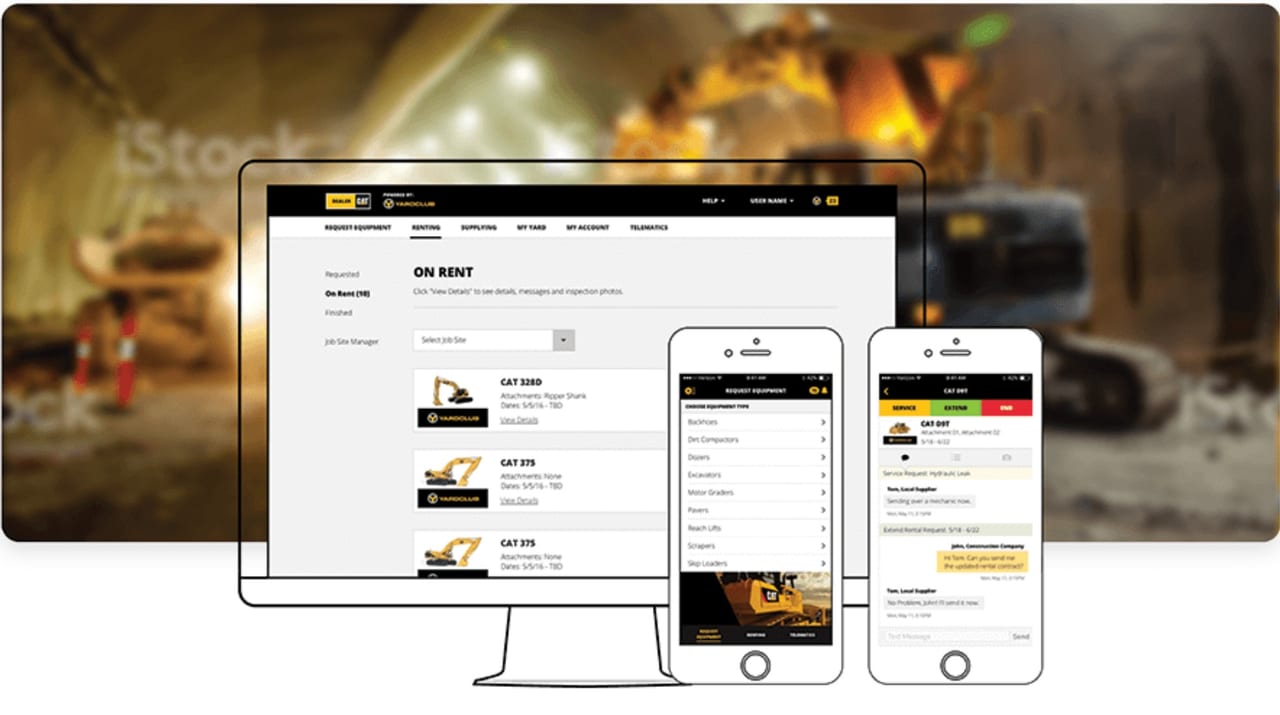
Full marketplace, payments, and transaction infrastructure built end to end; $120M+ processed, acquired by Caterpillar in 2017 — evidence we wire software safely into money-moving systems of record.
Silicon Prime is a Stanford-rooted Responsible AI lab, founded in 2011, run by founder Kelvin Tran — 20+ years of production engineering, personally accountable for every engagement. When an agent shouldn’t be autonomous, we’ll tell you — which a vendor paid to ship agents won’t.
Why build your agents with us
01
Responsible AI is the founding charter. For a system that acts on your behalf, governance — what it may do, when it stops for a person, how every action is logged — is the product, not a checkbox.
02
Staged autonomy, not all-or-nothing. An agent starts gated and earns each rung only as its task-success and intervention metrics justify it — the discipline most cancelled projects skipped.
03
Engine-agnostic. We benchmark OpenAI, Claude, and Gemini on your actual tasks and route to whichever plans and uses tools best — no partnership steers the recommendation.
04
Founder-led, one accountable lead. No account managers, no handoffs — the person who scopes the agent answers for what it does in production.
05
Built to transfer. Prompts, evals, tool layer, and the autonomy charter are assigned to you, with your team trained to run, audit, and extend the agents when we step back.
Where AI agents earn their keep first
Fintech
Reconciliation, dispute-handling, and servicing agents where every action carries an audit trail and write operations stay behind approval gates. Fintech software →
Ecommerce & retail
Order, returns, and post-purchase agents wired to live order and fulfillment systems so the agent completes the task, not just routes it.
Software & IT operations
Engineering-pipeline and incident-remediation agents under the same review gates a senior engineer would demand — the functions McKinsey shows adopting agents fastest.
Questions buyers ask before building
What teams want to know before they let an agent act on their systems.
01How is an AI agent different from a chatbot or an LLM app?+
A chatbot answers; an agent acts. An LLM application or conversational assistant responds to a prompt and may retrieve an answer. An agent takes a goal, decomposes it into steps, decides which tools to call, executes them against your systems, checks the result, and re-plans if a step fails — completing multi-step work, not a single turn. That autonomy is the value and the risk, which is why the engineering around task decomposition, tool governance, evals, and approval gates is the entire job.
02How do you stop an autonomous agent from doing something harmful?+
Three layers. First, scoped tools — each action the agent can take is permissioned to exactly what that step needs, with write access deliberately separated from read. Second, approval gates — anything irreversible or high-cost stops for a human, and the agent starts low on the autonomy ladder and rises only as its metrics earn it. Third, evaluation and monitoring — we test the agent against your real cases before launch and instrument every production run for the actions that must never fire. It escalates with a written summary rather than guessing.
03How do you measure whether an agent actually works?+
Against a task suite built from your real cases, scored before it ever touches production: task-success rate, tool-call correctness, intervention rate, and cost-per-task. We set the targets at kickoff and report against them weekly through the pilot — so “it works” is a number you’ve seen, not a vibe from a demo. Most agentic projects that get cancelled skipped exactly this step.
04Single agent or multi-agent — how do you decide?+
We start with the simplest thing that works, usually a single well-scoped agent, because every additional agent adds coordination failure modes. We move to a multi-agent design only when one agent is overreaching on a genuinely complex task — splitting it into specialists (plan, retrieve, act, validate) with a supervising layer that catches handoff errors before they propagate. The architecture follows the task, not the trend.
05Which model do you build on — OpenAI, Claude, or Gemini?+
Whichever wins your evaluation on planning and tool use for your tasks. We benchmark the candidates on your real cases during design and route accordingly — and because the agent sits behind a model abstraction, switching later is a config change, not a rebuild. See our LLM development services for how we work across all three.
06How do you handle data security with an agent that touches our systems?+
The agent runs in your own cloud tenant under your access controls; every tool call is scoped and permissioned; write operations sit behind approval gates; and every engagement starts with an NDA and a security review. Business API traffic to the major providers isn’t used to train their models by default, and we document every data path and every action the agent can take so your team verifies rather than trusts.
07Who owns the agent when you’re done?+
You do — completely. Prompts, evaluation harness, tool layer, the autonomy charter, and the code transfer under full work-for-hire IP assignment signed at kickoff, and your team is trained to operate, audit, and extend it. Keep us on a reduced retainer or take the keys; the engagement is built around the handover.
08What does it cost and how long does it take?+
Most agents reach production in 4–8 weeks under a fixed-scope engagement with one accountable lead, payment tied to the ROI agreed up front. Build cost depends on scope — our AI development cost guide gives real ranges — and run cost is token-and-tool economics we model before building, so the first invoice is a forecast you’ve already seen.
Thirty minutes · No pitch deck
Ready to put an agent into production — not just a demo?
Bring the workflow. We’ll tell you honestly whether an agent fits it, how much autonomy it should have, what it takes to build, and what it costs to run.