There is a particular kind of quiet at 2am in an operations center. Not the quiet of nothing running, but the quiet of everything running smoothly, with nobody needing to intervene. This is the image that embodies a successful night shift. In this post, we explore the significance of uneventful night shifts and the disciplined decisions that make them possible.
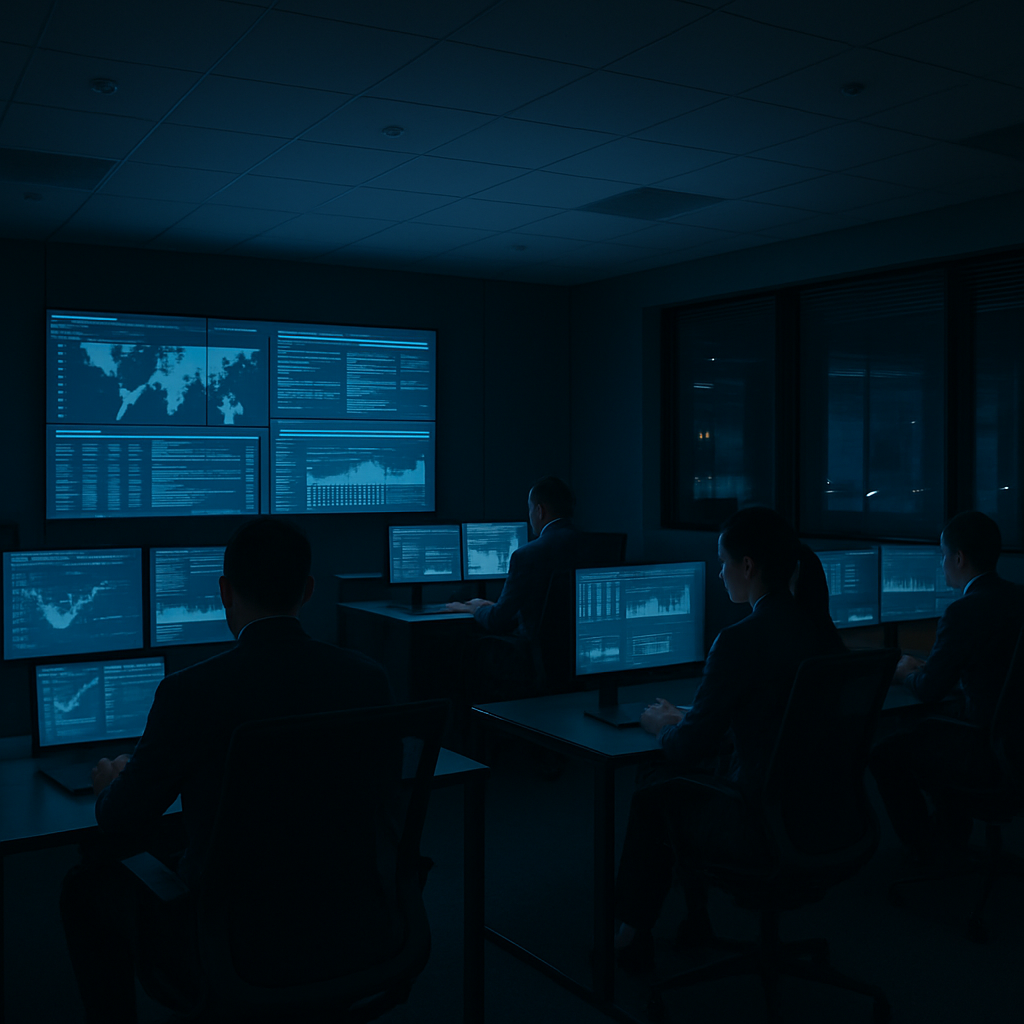
The Desk at 02:14 🖥️
Two monitors, one dimmed. A cup that went cold an hour ago. The on-call engineer is present, but the work is not. The dashboards are green, and the chair is mostly empty. That emptiness is the product. Competitors like Datadog or PagerDuty might offer similar monitoring solutions, but our approach emphasizes the tranquility of a well-managed system.
<figure class="figure-wide"> <div class="collage"> <div class="ph"><img class="ph-photo" src="https://siliconprimewebsite.blob.core.windows.net/blog-media/images/1d56fb85-b886-44ef-b365-1a24c6f09b4b.jpg" alt="2am operations center desk with computer monitors illustrating operational calm at Silicon Prime." loading="lazy" style="position:absolute;inset:0;width:100%;height:100%;object-fit:cover;z-index:0;border-radius:14px"><span class="ph-tag">02:14 · The on-call desk</span></div> <div class="ph-stack"> <div class="ph"><img class="ph-photo" src="https://siliconprimewebsite.blob.core.windows.net/blog-media/images/253fa21e-2bd3-4f80-b995-b0d8f476772d.jpg" alt="2am operations center desk illustrating operational calm and human-led AI at Silicon Prime." loading="lazy" style="position:absolute;inset:0;width:100%;height:100%;object-fit:cover;z-index:0;border-radius:14px"><span class="ph-tag">All systems · nominal</span></div> <div class="ph"><img class="ph-photo" src="https://siliconprimewebsite.blob.core.windows.net/blog-media/images/6f9e2ee2-66db-4ba0-b010-326865ffed67.jpg" alt="2am operations center graph illustrating operational calm and daytime decision-making." loading="lazy" style="position:absolute;inset:0;width:100%;height:100%;object-fit:cover;z-index:0;border-radius:14px"><span class="ph-tag">Latency wall · flat</span></div> </div> </div> <figcaption>Top to bottom — the desk at 02:14, the health board, the latency wall holding flat through the night.</figcaption> </figure>
What the Dashboards Are Not Showing 📊
A loud night shift may seem impressive. Engineers leaning in, pointing at graphs, typing rapidly. We've been through those nights. They often indicate poor upstream decisions — a release that should have waited, a scope that was too wide, a risk note nobody read. Tools like New Relic or Splunk can provide insights, but the true goal is a seamless, quiet night.
| Scenario | Description |
|---|---|
| No incident bridge open | The phone is on the desk, face down, dark. |
| No deploy in flight | Nothing ships overnight unless a human is awake. |
| One chair, not five | If a night needs five people, daytime failed. |
A calm night shift is not luck. It is the receipt for every careful decision made in daylight.
<figure class="figure-wide"> <div class="frame ph" style="aspect-ratio:21/9;border-radius:14px;display:flex;align-items:flex-end;color:#f4f1ea;font-family:var(--mono);font-size:10.5px;letter-spacing:.08em;text-transform:uppercase"><img class="ph-photo" src="https://siliconprimewebsite.blob.core.windows.net/blog-media/images/828f34a8-cc1f-44ef-b8ed-609681ba0c68.jpg" alt="Person arranging comics display at Silicon Prime operations center illustrating proactive daytime preparation." loading="lazy" style="position:absolute;inset:0;width:100%;height:100%;object-fit:cover;z-index:0;border-radius:14px"><span class="ph-tag">03:41 · The engineer refilled the coffee. That was the whole shift.</span></div> <figcaption>The empty chair at 03:41. Nothing happened, and that is the headline.</figcaption> </figure>
Why We Measure the Boring Nights 📈
We do not pay people to fight fires at 2am. We pay them to be awake, present, and mostly idle — because when they are needed, the cost of not having a human there is enormous. The real KPI is not incidents resolved. It is nights where the human was there and did not have to do anything. This number goes up when daytime decisions are disciplined, and it is the metric we take pride in.
The empty chair is not a sign that the job is automated away. The chair is occupied. It is just that, on a good night, the person in it gets to drink their coffee while it is still hot.
Further Reading
🚀 Ready to Build with AI?
Contact Silicon Prime — we help companies design and ship production-grade AI products.
Comments