SPrime AI
Book a call

From the Aegis war room (the one we don't use anymore).

A short photo essay reflecting on the workspace evolution at Silicon Prime from before Aegis. Explore how our release process has transformed, moving away from

A short photo essay reflecting on the workspace evolution at Silicon Prime from before Aegis. Explore how our release process has transformed, moving away from the late-night war room to a more efficient, streamlined approach.

Team discussing software release strategies in a modern office, reflecting Silicon Prime's workspace evolution.

📅 Friday, 6 p.m.

Releases happened at the end of the week, after the office emptied, when a mistake would be quietest. That timing was a confession. If you only ship when nobody is watching, you do not trust the thing you are shipping.
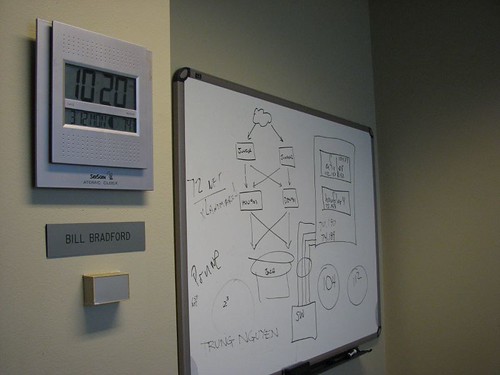
Aegis war room whiteboard diagram and clock reflecting Silicon Prime's software release evolution.The whiteboard rollback plan
Top to bottom — the room at six, the hand-drawn rollback plan, the dinner that meant we'd be late.

🏢 What the room was for.

The room existed because the release was big enough that no single person could hold it in their head. So we put eight people in front of one screen and hoped the right one was looking at the right graph at the right second.

  • One owner per release — and that owner had not slept properly in two days.
  • A rollback plan in dry-erase marker — which is to say, a rollback plan nobody had tested.
  • A phone tree — taped to the wall, for when the graph went the wrong way.
A war room is not a sign of preparedness. It is a sign that the release is too big to ship safely.

Similar approaches were adopted by other companies like Atlassian and GitLab, which also emphasize smaller, more manageable releases for efficiency.

🚪 Why it's empty now.

We made the releases small. Small enough that one person can hold one in their head, on a Tuesday, at eleven in the morning, with no audience. The room is a storage closet now. We are glad to have it back.

Play video

🚀 Ready to Build with AI?

Contact Silicon Prime — we help companies design and ship production-grade AI products.

 FAQ

Frequently asked questions

Releases happened at the end of the week, after the office emptied, when a mistake would be quietest. The post calls that timing a confession: if you only ship when nobody is watching, you don't trust the thing you're shipping. It became the signal that the release process needed to change.

The room existed because a release was too big for any single person to hold in their head, so the team put eight people in front of one screen and hoped the right one was watching the right graph at the right second. The post frames a war room not as preparedness but as a sign the release is too big to ship safely.

The post names three weak points: one owner per release who hadn't slept in two days, a rollback plan in dry-erase marker that nobody had tested, and a phone tree taped to the wall for when the graph went wrong. Each is presented as a symptom of releases that were simply too large.

They made releases small, small enough that one person can hold one in their head on a Tuesday at eleven in the morning with no audience. The room is a storage closet now. The post presents shrinking the unit of release, not adding more oversight, as the fix.

The post argues the opposite: a war room is not a sign of preparedness, it's a sign that the release is too big to ship safely. Eight people watching one screen is a workaround for a release no single person can hold in their head, not evidence of discipline.

The post highlights that the old rollback plan was written in dry-erase marker, which is to say a rollback plan nobody had tested. A rollback you've never exercised offers false comfort during a late-night incident. Smaller releases reduce reliance on heroic, untested recovery during deploys.

Instead of shipping Friday at 6 p.m. when the office had emptied, releases moved to an ordinary Tuesday at eleven in the morning with no audience. The post treats shipping in broad daylight as evidence the team now trusts the release, the reverse of the old quiet-Friday confession.

Thirty minutes · No pitch deck

Ready to turn AI experiments into measurable ROI?

Bring one outcome you'd like AI to move. We'll help you scope a pilot you can actually measure — and tell you honestly if it's not worth doing yet.

Comments