In 2026, the success of AI projects depends on effective execution and governance rather than just innovation. This article explores AI consulting services, covering strategy, implementation, and ROI, and provides a practical guide for enterprise leaders. Key topics include readiness assessments, building a prioritized roadmap, and measuring outcomes, along with vendor selection criteria, engagement models, and ROI formulas tailored to different industries.
Why Enterprise AI Consulting Still Matters in 2026
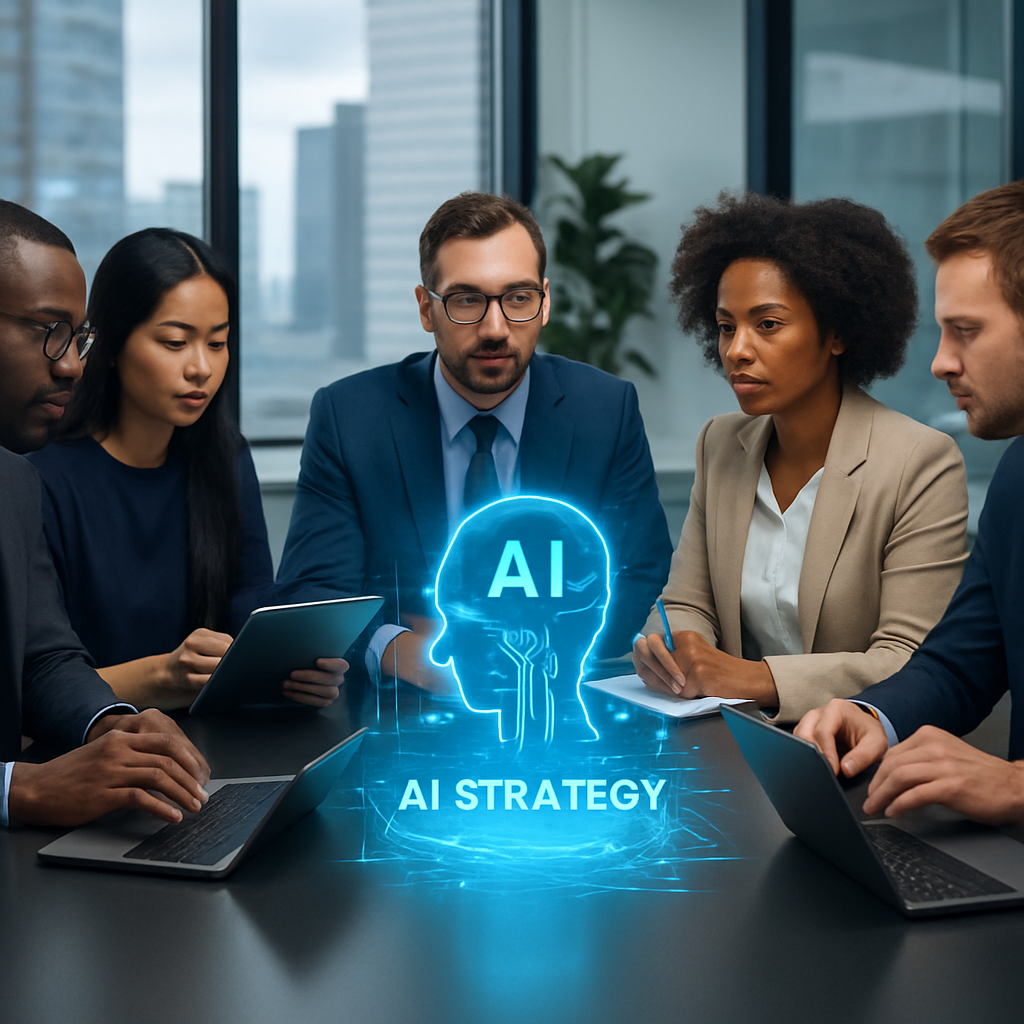
AI consulting services remain vital as moving models from pilots to production involves complex systems beyond data science. Companies like Deloitte and Accenture focus on large-scale implementations, while specialized boutiques offer deep domain expertise and integration with legacy workflows. Our approach integrates strategy, MLOps, governance, and change management for repeatable value.
Three Pragmatic Reasons to Hire External AI Advisors Now
- Execution orchestration: Internal teams often lack the delivery model to link use cases to MLOps pipelines and training.
- Contracting and risk allocation: Outcome-based contracting is rising, but most companies lack the necessary legal frameworks and baseline metrics.
- Governance and procurement unblockers: External consultants can effectively translate frameworks into procurement controls that legal teams accept.
| Example Use Case | Pilot Outcome | Production Challenges | Solution |
|---|---|---|---|
| Claims triage automation by a regional insurer | 25% reduction in handle time | Model drift and missing feature pipelines | Implemented continuous monitoring and retraining |
AI Readiness Assessment: Scope, Method, and Checklist
An effective AI readiness assessment should provide a concrete go/no-go decision with a prioritized remediation plan for the next 12–18 months. Our methodology evaluates four pillars: data readiness, infrastructure maturity, organizational capability, and governance.
| Pillar | Minimum Deliverable (Pilot) | Threshold for Production |
|---|---|---|
| Data and feature readiness | Source catalog, sample labels | Continuous lineage, 80% feature coverage |
| Infrastructure and platform | Deployment proof points | Automated CI/MLOps, capacity planning |
| Org capability and roles | Identified product owner | Dedicated model steward, trained end users |
| Governance and compliance | Regulatory checklist | Formal audit trail, access controls |
Designing an Enterprise AI Strategy That Links to Business Value
An AI strategy must provide a clear value map, linking specific use cases to financial or risk metrics. This involves working backward from business metrics like revenue or risk exposure to determine the AI capabilities needed.
Value Mapping: Convert Ideas into Measurable Outcomes
- Columns for each use case: Problem statement, affected process, expected lift, data readiness score, owner
- Scoring: Impact vs. effort, with modifiers for compliance risk and time to value
Implementation Roadmap and Delivery Models
Implementation translates strategy into either recurring cost or recurring value. A phased roadmap is critical: Discovery & POC → Engineering & Integration → Productionization with MLOps → Scale & Continuous Optimization.
Delivery Models and Commercial Choices
| Delivery Model | When to Use | Typical Downside |
|---|---|---|
| Fixed-price pilot | Exploratory validation | Scope creep risk |
| T&M (time & materials) | Unclear requirements | Cost uncertainty |
| Outcome-based / risk-share | Well-measured metrics | Complex contract design |
Measuring AI ROI: Frameworks, Metrics, and Sample Calculations
Capturing durable ROI involves using finance language for baselines, rigorous attribution, and including ongoing operations and risk costs in TCO.
| Benefit Component | Annual Value (USD) | Notes |
|---|---|---|
| Handle time reduction | 540,000 | 100,000 calls 70% handled 6 min 30% reduction $0.50 * 12 months |
| Call deflection | 720,000 | 100,000 calls 20% deflected 6 min $0.50 12 months |
| Total annual benefit | 1,260,000 | Sum of above |
| Annualized costs | 780,000 | Engineering, hosting, monitoring, training |
Industry Specific AI Solutions and Compliance Considerations
Healthcare: Clinical Risk, Data Locality, and Validation
Healthcare AI projects require documented clinical validation and data minimization to meet HIPAA standards. Our federated learning approach can help avoid raw data sharing while achieving viable AUC gains.
Financial Services: Explainability, Auditability, and Risk Frameworks
In finance, simpler models or hybrid pipelines often win approvals faster due to their explainability and audit trails.
Selecting a Consulting Partner and Engagement Models
When procuring AI consulting services, aligning on outcomes is critical. Choose between big firms like PwC for governance-heavy projects or specialized boutiques for rapid iterations and domain expertise.
| Archetype | Strengths | Trade-offs | Best Fit |
|---|---|---|---|
| Big Four full service | Deep compliance resources | Higher cost | Large regulated programs |
| Specialized AI boutiques | Fast delivery | Narrow service breadth | Mid-market programs |
🎬 Related Video

Further Reading
- AI Implementation ROI for Private Equity: Framework and Benchmarks
- MCP, A2A and the Real ROI: What Nobody Tells You About Multi-Agent AI in 2026
🚀 Ready to Build with AI?
Contact Silicon Prime — we help companies design and ship production-grade AI products.
Comments